AI generated toy designs are visual concepts created with generative tools from written prompts, reference images, or sketches. A prompt might describe a wooden sea turtle with rounded flippers, a blue shell, and movable wheels. The system can produce several interpretations in minutes. That speed is useful. It does not make every result practical.
Designers can use these images to explore shapes, colors, characters, and play features before building a physical sample. They may compare a plush fox with stitched paws against a small stacking toy, then refine the direction with hand sketches or 3D software. The process still depends on human judgment. A polished image may hide weak joints, awkward proportions, difficult cleaning, or parts too small for the intended age group. Looks can mislead.
This guide explains how AI generated toy designs are created, where they fit in a product workflow, and what teams should review before production. It also considers prompt writing, iteration, prototyping, and communication between designers and manufacturers. Useful results require clear goals and careful checks, not just clever wording. I would not treat an attractive render as proof that a toy is safe, durable, or enjoyable. Those qualities need appropriate testing and qualified review. AI can open a door, but it cannot decide what children need. The boundary is worth questioning: when does faster ideation improve play, and when does it merely multiply images?
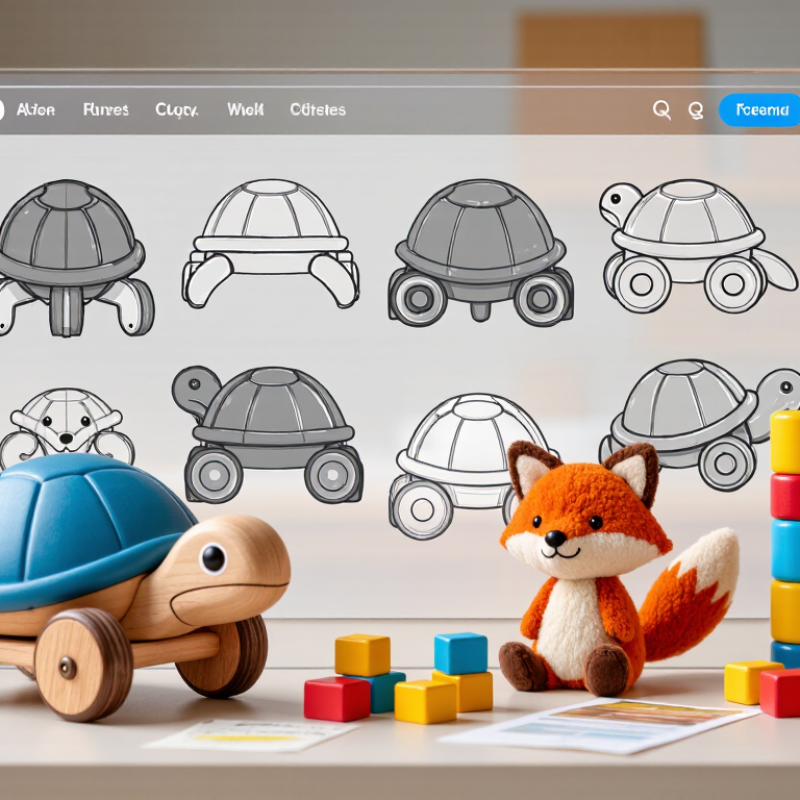
AI-generated toy designs are visual or 3D concepts created with generative software from written prompts, sketches, or reference images. A designer might describe a wooden pull-along animal with rounded ears and a wide base, then compare several generated shapes. The software can suggest colors, facial details, and proportions in minutes. These outputs are starting points, not finished toys. Human designers still need to check balance, small-part risks, material choices, durability, and whether a child can comfortably hold the object. A render can look charming yet feel clumsy in a child’s hand. That gap matters.
The wider AI market is growing quickly, but its figures do not prove that AI designs make better toys. Stanford’s 2024 AI Index reported $25.2 billion in global private investment in generative AI during 2023. McKinsey Global Institute estimated that generative AI could add $2.6 trillion to $4.4 trillion in annual value across many industries. These reports describe broad investment and economic potential, not toy-design outcomes. For toy teams, the practical test is smaller: does a generated concept save sketching time while remaining buildable and safe? Sometimes it helps. Sometimes the proportions need another round, or the idea feels oddly generic. A physical mock-up often reveals what the screen cannot.
AI toy design often starts with a brief: a soft-bodied sea creature, a rounded body, movable fins, and a limited color palette. A designer enters these details, sometimes with sketches or reference shapes, into an AI tool. The system generates visual options by combining learned patterns with the prompt. Small changes can produce surprisingly different faces, proportions, or textures. That is the sketch stage, not the finished toy.
Designers select useful ideas and refine them through repeated prompts or digital editing. They may ask for larger eyes, fewer sharp corners, or a base that keeps the figure upright. Some tools can help turn images into rough 3D models, but those models often need careful manual adjustment. A fin that looks elegant on screen may be too thin to make reliably. A cute head may also feel awkward in a child’s hand.
Human review matters at every step. Designers check scale, balance, durability, and how parts connect, then share prototypes for hands-on feedback. They also consider age suitability and have qualified specialists assess safety requirements before production. AI can speed up exploration, but it does not reliably judge comfort or play value. It can repeat familiar shapes, too, making fresh ideas harder to spot. And some charming shapes simply do not work in a child’s hand.
AI-assisted toy design relies on carefully chosen data, not a magic prompt. Teams may combine hand-drawn sketches, written shape descriptions, and reference images they have permission to use. Examples should show varied proportions, materials, and age-appropriate forms. Poorly labeled data can repeat familiar silhouettes or produce awkward joints. That happens. Data selection matters.
Image-generation systems can explore colorways and surface patterns, while text tools can organize design notes or suggest variations. Neither can confirm that a toy is safe or practical to manufacture. Designers often bring promising concepts into 3D modeling software to adjust wall thickness, connections, and balance. Mesh checks and basic physics simulations may reveal thin parts or a figure that tips over. A screen is not a test.
Physical prototypes still matter. A small printed model can expose a sharp-looking edge, a loose-fitting piece, or a shape that feels clumsy in a child’s hand. Designers should review materials, intended age range, and applicable safety requirements with qualified specialists. This stage can be slow, and AI suggestions sometimes need substantial correction. That is useful feedback, not a failure. Keep records of data sources, design changes, and test results; clear records make decisions easier to check and improve.
AI-generated toy designs commonly begin as concept images: a soft, round-bodied animal, a stackable wooden shape, or a small figure with several facial expressions. Designers can quickly explore colorways, silhouettes, and themes before building physical prototypes. Another type is a customizable toy, where generated options help adapt clothing, accessories, or patterns to different ages and interests. For learning products, AI can suggest puzzle layouts, building-piece variations, or story characters that support a specific lesson. These outputs are starting points, not finished safety or usability checks.
Teams use generated designs to widen early brainstorming, prepare visual mockups, and compare alternatives before investing in molds or samples. Circana’s 2024 global toy market review reported sales growth of 1% across 12 key markets, a modest shift that makes careful product testing important. McKinsey’s 2024 global AI survey found that 65% of respondents’ organizations regularly used generative AI in at least one business function; the figure covers many industries, not toy makers alone. AI can speed up exploration. But a polished render may hide awkward grips, fragile joints, or parts that are too small. Designers still need to test real prototypes with children and caregivers, and honestly, some generated concepts simply do not work.
What Are AI Generated Toy Designs?
Benefits and Limitations of AI-Generated Toy Designs
AI-generated toy designs are concept images or models created with software from written prompts, sketches, or reference shapes. A designer might request a soft, rounded animal figure with oversized ears and a hollow body. The system can produce several variations quickly. That matters. Early ideas become easier to compare before anyone builds a physical prototype.
This speed can support creative exploration, especially when a team needs options for shapes, colors, or play themes. Designers can test a playful silhouette, then adjust its proportions without starting over. AI may also reveal combinations people had not considered. But an attractive image is only a beginning. It may show a floating accessory, a thin joint, or a part too small for comfortable handling. On-screen charm does not prove real-world usability.
Toy design also requires careful checks for durability, age suitability, materials, and production constraints. AI tools may overlook these details or repeat familiar visual patterns. A smooth-looking surface could hide awkward seams once manufactured. Human review and physical testing are essential. Not optional. Even experienced teams can miss things when a concept looks polished. It is worth asking who can grip the toy, how it might break, and whether the design remains engaging without its most eye-catching feature.
It is a concept image or rough model made from prompts, sketches, or reference shapes. It is a starting point, not a finished toy.
It can quickly create variations in color, shape, and texture. Designers might compare round bodies, oversized ears, or different fin shapes. Fast, but only on screen.
No. It cannot reliably assess safety, comfort, or age suitability. Qualified specialists and physical testing are still needed.
A thin fin may look graceful but be difficult to make. A large head might also feel awkward in a child’s hand.
A small printed model can expose sharp-looking edges, loose connections, or clumsy proportions. Hands matter.
Teams may use sketches, written descriptions, and reference images they have permission to use. Varied examples can help, while poor labels may repeat familiar shapes.
3D modeling, mesh checks, and basic physics simulations can reveal thin parts or a figure that tips over. Still, a screen is not a test.
They should keep notes on data sources, design changes, and test results. It seems tedious, but clear records make decisions easier to review.
AI generated toy designs are toy concepts or product forms created with the help of artificial intelligence. A designer can provide prompts, sketches, reference images, or practical requirements, and an AI system can turn those inputs into visual ideas. The process may involve generating several options, reviewing them, and refining promising results to better suit a toy’s intended age group, style, materials, and function.
These designs can draw on organized image and shape data, along with tools for image generation, 3D modeling, and digital prototyping. They may be used to explore characters, play objects, educational toys, or early product concepts. AI can speed up brainstorming and help people consider a wider range of shapes and themes, but its output may be inconsistent, difficult to manufacture, or unsuitable for a particular audience. Human judgment remains important for checking usability, safety, originality, and production feasibility before a concept is developed further.