Why Are AI Plush Toys Popular Worldwide?
AI plush toys combine a familiar comfort object with responsive technology. A child squeezes a soft paw, asks a question, and hears a reply. For adults, a gentle voice or playful exchange can make a toy feel less like a gadget and more like a companion. Sherry Turkle, an MIT scholar of technology and society, wrote, “We expect more from technology and less from each other” in Alone Together. Her observation offers a useful lens: these toys may invite connection, but they also raise questions about what people expect from it.
Their appeal is not identical everywhere. Families may value language practice, storytelling, or interactive play; collectors may enjoy character design and novelty. A toy’s voice, response speed, privacy settings, and age guidance can shape whether it feels delightful or frustrating. Small details matter. A familiar bedtime story can charm; a repeated, awkward answer can break the spell. The experience also depends on thoughtful design, clear product information, and suitable adult supervision for younger children.
This introduction explores the forces behind their global popularity, from emotional appeal and personalization to changing play habits. It also considers practical limits: AI responses can be imperfect, features differ by product, and a plush toy cannot replace human care. That last point deserves more reflection than marketing often allows. Popularity is real, but it is not proof that every child needs one.
What AI Plush Toys Are and How They Work
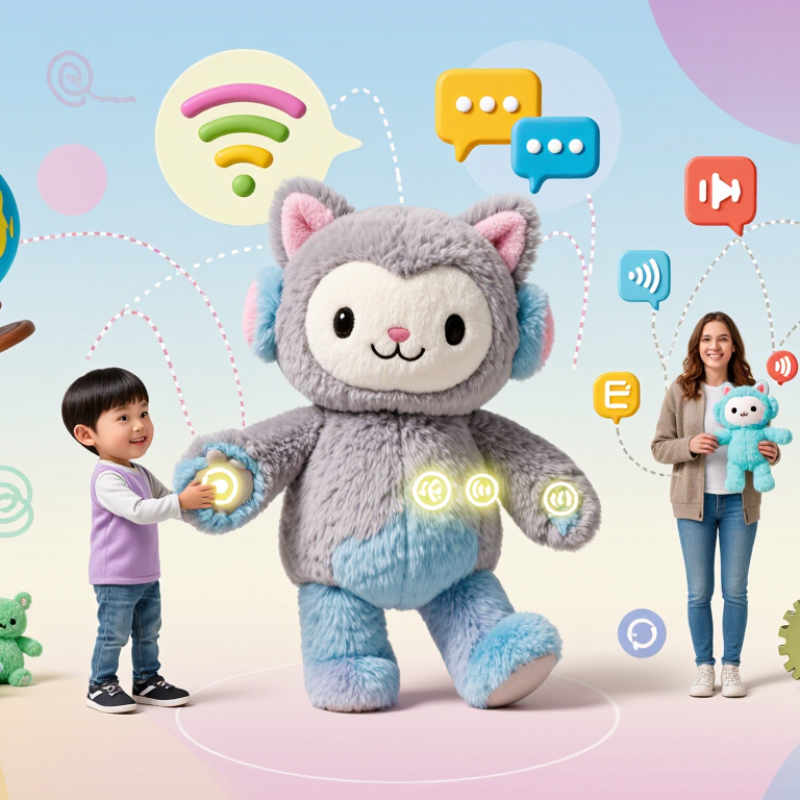
An AI plush toy combines a familiar soft toy with microphones, a speaker, and conversational software. When a child speaks, speech-recognition tools turn the sound into words. A language model then generates a reply, which the toy speaks aloud. Some designs process requests on the toy; others connect to remote servers through an app or network. The exact setup varies.
The interaction can feel simple: a child asks a question, hears a response, and keeps talking. Some toys remember preferences or respond to touch, but memory and features depend on the product. Replies can miss. A toy may misunderstand a name, repeat itself, or give a confident but inaccurate answer. That gap matters, especially when children treat a plush companion like a trusted listener.
Broader toy sales offer context, not direct proof of AI-plush demand. Circana reported U.S. toy sales rose 6% in 2024, across the toy market as a whole. Stanford HAI’s 2025 AI Index reported that private investment in generative AI reached $33.9 billion worldwide in 2024, showing how quickly the underlying technology is expanding. For caregivers, practical questions remain: Does the toy explain when it is listening? Can its conversation history be cleared? The answers are not always obvious from a cuddly exterior.
Why Are AI Plush Toys Popular Worldwide? - What AI Plush Toys Are and How They Work
| Dimension | What It Means | How It Works or Why It Matters |
|---|---|---|
| Definition | An AI plush toy combines a soft, stuffed-toy exterior with electronic components that enable interactive features. | Depending on the design, it may respond to speech, play audio, react to touch, or support conversational interaction. Features vary by toy. |
| Voice input | A microphone captures a child’s or user’s spoken words. | Some toys process audio on the device; others send it to an online service for speech recognition or response generation. Not every plush toy uses generative AI. |
| AI response | Software interprets input and selects or generates a response. | Responses may come from scripted dialogue, speech-recognition systems, or language models. Online processing can require an internet connection and may introduce delay. |
| Output and interaction | A speaker, lights, or touch sensors provide feedback. | The toy may speak, play a sound, or react when touched. These features can make interaction feel more immediate than a conventional plush toy. |
| Emotional comfort | The familiar soft form is paired with responsive interaction. | The combination may appeal to people seeking a comforting companion or playful conversation. Individual experiences and needs differ. |
| Play and learning | Interactive features can support stories, questions, songs, or imaginative play. | A toy can invite turn-taking and creative play, but its educational value depends on its content, design, and how it is used. |
| Language and localization | Speech features can be adapted for different languages and settings. | Available languages, accents, cultural references, and voice quality depend on the software and its support; availability is not uniform worldwide. |
| Convenience and access | Hands-free voice interaction can be simpler than using a screen for some activities. | This may suit story time or casual play, though a charged battery, suitable connectivity, and adult setup may be needed for certain features. |
| Privacy and safety | Microphones and connected services can involve sensitive voice data, especially when children use the toy. | Caregivers should check recording and storage practices, parental controls, connectivity requirements, and the toy’s age guidance before use. |
| Practical limitations | AI responses and device performance are not always consistent. | Background noise, accents, network outages, battery life, and the limits of the underlying software can affect the interaction. |
Note: This table describes common features and possible appeal; it does not represent a measured global popularity ranking. Capabilities and data practices vary by product.
FAQS
Small sensors, a speaker, and a microphone fit inside the soft body. The seams still matter.
Speech recognition turns words into text, then a language system selects a suitable reply. It may misunderstand.
A pressure sensor may detect a squeeze. Repeated squeezing should be part of testing.
They may limit topics and use short, calm replies. Pauses give children room to speak again.
Electronics may sit in a removable pocket. Caregivers should follow the fabric’s care instructions.
A soft body and gentle voice can feel less intimidating than a screen. Small moments matter.
No. It may invite conversation, but it is not a substitute for attentive human care.
Check privacy settings and keep screen-free routines in mind. Replies can sound repetitive, too.
Conclusion
AI plush toys combine the familiar comfort of soft, cuddly companions with interactive technology. Depending on their design, they may use microphones, speakers, sensors, and simple artificial intelligence to respond to speech, recognize touch, tell stories, or offer playful conversation. These features are built into the toy’s structure so that technology supports the experience without taking away its welcoming, approachable feel.
In daily life, people may use AI plush toys for entertainment, imaginative play, or comforting companionship. Their appeal comes from making interactions feel more personal while pairing digital features with the warmth of a traditional stuffed toy. They can encourage creativity, provide engaging activities, and offer a sense of company. At the same time, thoughtful design matters: users should understand how the toy handles conversations and personal information, and its responses should be suitable for its intended audience. Balancing helpful features with privacy, safety, and clear expectations can make these toys more enjoyable and trustworthy.