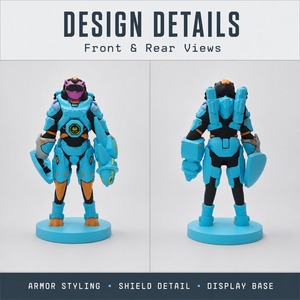
Factory Customized 3D Robot PVC Doll AI Technology Design Silk Screen Printed Model
Tested, compliant, and ready for brand customization. Integrated with edge-processing, emotional LCD displays, and cloud intelligence.
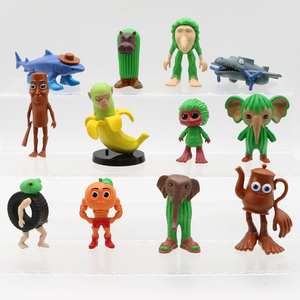
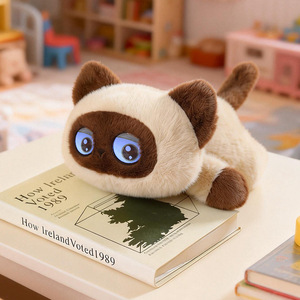
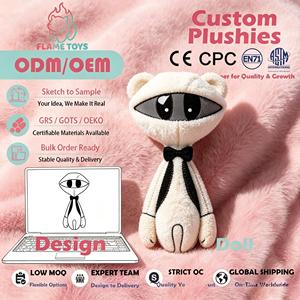
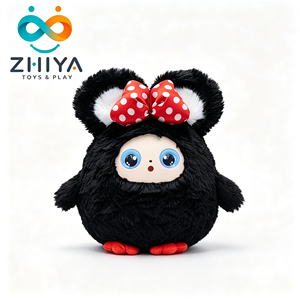
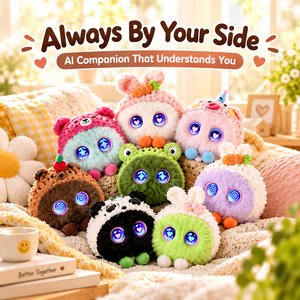
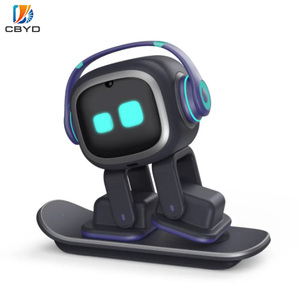
The manufacturing landscape for interactive smart toys has shifted permanently from traditional electro-mechanical playthings to complex hybrid cyber-physical ecosystems. An artificial intelligence (AI) companion toy is no longer merely an injection-molded chassis or stitched plush casing; it is an interconnected ecosystem composed of acoustic transducers, multi-axis sensory arrays, edge-inference microcontrollers, secure wireless transceivers (Wi-Fi/BLE), cloud neural networks, and localized user-data pipelines.
For international procurement directors, importers, and brand owners targeting European Union territories, procuring AI-driven companions involves clearing unprecedented regulatory hurdles. A simple declaration of conformity under standard toy safety mandates is no longer sufficient. Modern AI companion manufacturing requires rigorous intersectional compliance spanning the Toy Safety Directive 2009/48/EC, the Radio Equipment Directive (RED) 2014/53/EU, strict electromagnetic compatibility, and the incoming stringent privacy benchmarks governed by both GDPR and the EU Artificial Intelligence Act. As a certified Shenzhen OEM/ODM manufacturer established in 2017, AIbottoy Hub engineers eliminate friction by uniting mechanical housing, consumer electronics, and Tuya-based neural infrastructure under one unified, CE-inspected roof.
Achieving a genuine CE marking that withstands customs scrutiny and market surveillance demands a three-tier quality control architecture. Many factories falsely isolate plush quality from circuit-board safety. Below is our systematic protocol executed across 100% of production runs:
| Inspection Tier | Applicable Directives & Standards | Critical Inspection Criteria | OEM Factory Execution Standard |
|---|---|---|---|
| 1. Physical, Mechanical & Chemical Safety | EN 71-1:2014+A1:2018 EN 71-2 (Flammability) EN 71-3 (Heavy Elements) |
90N pull-force tests on seams, eyes, and buttons; seam separation over acoustic cavity; drop tests from 1.5m; non-phthalate plasticizers; saliva migration fastness. | Pre-molding raw fabric tensile tests, automated digital stitch tensioning, and third-party laboratory verification before mass cut-and-sew operations. |
| 2. Electrical, Thermal & Battery Security | EN IEC 62115:2020+A11:2020 UN 38.3 Shipping Standard IEC 62133-2 Secondary Cells |
Thermal runaway prevention under stalled motor state; internal short-circuit mitigation; charging curve protection; non-detachable battery shielding; USB-C over-voltage cutoff. | Precision automated battery spot-welding; isolated fire-retardant internal battery enclosures; 100% burn-in cycles under charge/discharge loads. |
| 3. RF Spectrum, EMC & Wireless Directives | RED Directive 2014/53/EU EN 301 489-1/-17 (EMC) EN 300 328 (2.4 GHz ISM) |
Transmitter spurious radiation; Wi-Fi/Bluetooth coexistence; receiver sensitivity inside high-density polyfill stuffing; static discharge resilience (±8kV air / ±4kV contact). | Pre-scan in anechoic chambers; automated algorithmic RF channel testing during PCBA final functional verification before casing ultrasonic sealing. |
Procurement teams navigating the 2025–2030 horizon must design supply chain architecture to accommodate rapid technical shifts. Buyers who anchor their sourcing strategies around legacy mechanical voice boxes will face shrinking margins and high channel obsolescence. Our engineering audits highlight four dominant sourcing vectors:
Next-generation smart companions will execute local wake-word recognition, sentiment detection, and basic command routines offline via ultra-low-power NPU chips, reducing server compute costs while safeguarding child privacy.
Static button presses are obsolete. Buyers demand integrated capacitive skin sensors, dual emotional LCD screens displaying micro-expressions, and directional MEMS microphones calibrated to decipher subtle vocal cadence.
Global regulatory enforcement is penalizing unsafe IoT toys. Procurement must favor OEM facilities utilizing localized hosting hubs, end-to-end TLS encryption, zero biometric storage, and compliant parental consent panels.
Since 2017, Shenzhen AIbottoyhub Technology Co., Ltd. has bridged the gap between whimsical product design and rigorous industrial manufacturing. Sourcing electronic smart toys often breaks down because plastic injection molders do not comprehend wireless RF firmware, while electronic assembly plants do not understand textile seam tension or EN 71 drop hazards. We provide an integrated, certified solution:
Fabric density dampens sound pressure levels. Our engineers design specialized internal resonant chambers with calibrated polyurethane acoustic membranes. We run decibel and frequency response checks before final embroidery to ensure crystal-clear child voice recognition and speaker playback under 85dB safe volume limits.
Route 1 (Existing App + Optimized AI Hardware System) provides functional prototypes in 25–30 days and mass production within 15–20 days following sample sign-off. It reuses mature, CE-approved internal PCBA assemblies, allowing you to focus your capital on brand exterior aesthetics, plush textures, and retail packaging.
Our standard manufacturing run starts at 1,000 to 2,000 units for customized plush skins, branded packaging, and custom voice prompts. Custom tooling for personalized plastic facial molds or animated LED displays typically requires an investment starting at USD 10,000.
We execute enforceable bilingual NDAs prior to reviewing CAD files or concept illustrations. Custom mold tooling remains the exclusive property of the buyer and is cataloged with tamper-evident tracking within our tooling vault. We never showcase proprietary OEM molds to third parties.
Connect directly with our senior engineering and sourcing directors in Shenzhen. Obtain rapid DFM feedback, complete BOM cost breakdowns, and regulatory compliance roadmaps for your AI companion project.