Featured AI Mystery Box & Intelligent Interactive Collectibles
Explore our export-ready hardware architectures combining ultra-soft tactile engineering, intelligent conversational processors, voice control, and certified electronic safety.
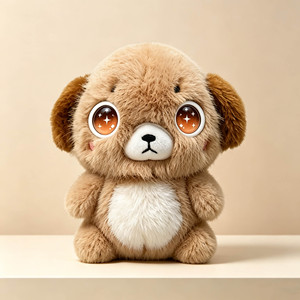
Trending Interactive AI Educational Robot Plush Toy with Personalized Conversation Smart Voice Control App/Wi-Fi Control
Multilingual LLM connectivity, deep emotion state modeling, acoustic mesh housing, and cloud companion features designed for educational mystery drops.
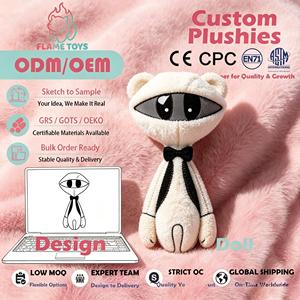
Customized Logo Custom Electronic Super Soft Plush Toy AI-Interactive Stress Relief Embroidered for Promotional Gifts ASTM
Pressure-sensitive haptic feedback arrays, ASTM-certified non-toxic crystal velvet materials, and customizable corporate or IP personality matrices.
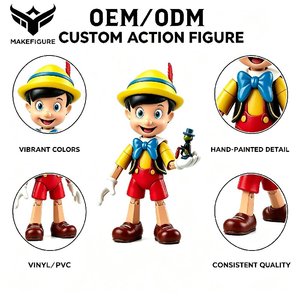
Newest Popular Custom 3D Anime Style AI Action Figure Vinyl Cartoon Toy Model Decoration Collectible for Kids
High-precision PVC/rotocast vinyl construction, embedded near-field NFC authentication chip, dynamic LED expressive eyes, and mobile digital twin synchronization.
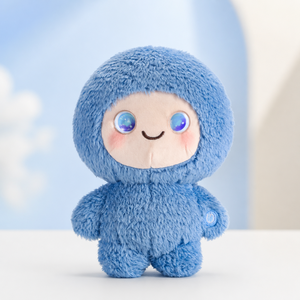
Smart AI Dialogue Plush Toy Interactive Voice Early Childhood Education Storytelling Singing Doll Wholesale
Real-time dynamic voice recognition, interactive algorithmic storytelling engine, anti-static plush exterior, and rechargeable lithium-ion core with UN38.3 compliance.
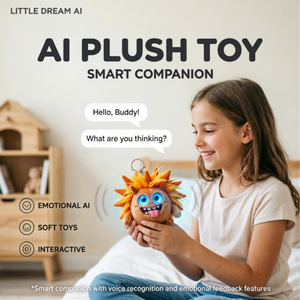
Latest Halloween Christmas Gift AI Soft Figure Smart Robot Toy for Kids Bold Birthday Festival Surprise Vacation Souvenir Item
Festive limited-edition blind box line featuring embedded ambient lighting, greeting firmware triggers, and durable double-stitched reinforced structural seams.
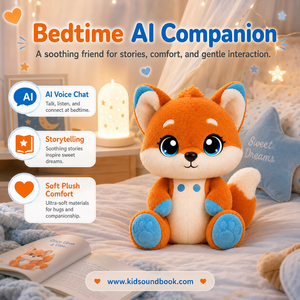
AI Educational Plush Companion Robot Toy for Kids 5-12 Multilingual Voice Chat Emotional Interaction Learning Content Toys
Targeted curriculum packs, responsive micro-servos for ear and head nodding, child safety acoustic throttling, and dual-band Tuya IoT connectivity.
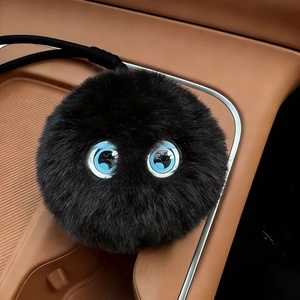
AI Intelligent Voice Interactive Plush Toy Electronic Learning Companion Doll for Teens Adults Early Education Educational Toy
Engineered for youth and adult desk collectibles; high-fidelity audio resonance chamber, low-noise directional microphone array, and custom character prompt skins.
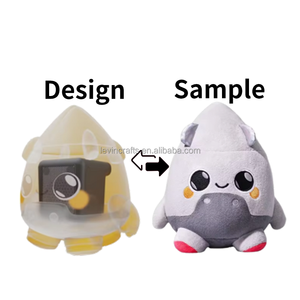
Custom AI Toy Can Carry on Endless Conversations AI-Generated Plush Toys AI Plushy (kids Toy) That Can Have a Conversation
Long-term context memory engine, dynamic persona scripting, modular battery sled for swift replacement, and full retail blind box foil/case custom packaging options.
Architecting the AI Mystery Box: Strategic Product Recommendations for Enterprise Buyers
How generative design algorithms, micro-hardware miniaturization, and IoT cloud services transform blind-box collectibles into recurring consumer engagement ecosystems.
The traditional global blind box and mystery box industry—long anchored by vinyl collectible models popularized by designer toy giants—is experiencing a profound technological convergence. Sourcing directors and IP licensing executives no longer look merely for aesthetic differentiation or rarity rarity tiers; they require tactile intelligence. An AI mystery box is not a static resin figure placed inside a sealed cardboard carton. It is an intricate synthesis of mechanical toy engineering, miniaturized consumer electronics, embedded edge computing, and cloud-based natural language processing (NLP).
Shenzhen AIbottoyhub Technology Co., Ltd. sits at the global epicenter of this industrial evolution in Guangming District, Shenzhen. Our cross-disciplinary engineering infrastructure brings plush artisans, precision injection mold engineers, PCBA layout specialists, and Tuya IoT platform architects under one unified manufacturing roof. For enterprise importers, retail chains, and IP licensors, we classify and recommend our AI mystery box solutions across three distinct product tier architectures:
Tier 1: Smart-Vinyl Hybrid Figurines
Combining rotocast vinyl aesthetics with hidden internal acoustic cavities, high-frequency NFC tags, and reactive LED expressive arrays. Perfect for designer collectible lines seeking digital twin mechanics.
- High-definition rotocast PVC / Vinyl body
- Tamper-proof NFC anti-counterfeit chip
- Micro-USB/Type-C concealed charging base
Tier 2: Interactive Emotional Plush
Integrating tactile soft-sculpture fabrics with Tuya-powered voice dialogue processors, capacitive squeeze sensors, and dynamic organic voice generation. Ideal for character companions.
- Acoustically calibrated mesh lining
- Tuya Smart Life cloud AI integration
- Certified non-toxic PP cotton stuffing
Tier 3: Modular Robotic STEM Units
Complex mechanical micro-actuators paired with voice prompt execution, multi-sensor collision detection, and programmable logic pathways. Targeted at educational novelty channels.
- Low-noise micro-stepper motors
- Real-time speech-to-intent engine
- Safe lithium polymer with PCM circuit
Future Procurement Trends in the Global AI Mystery Box Sector
Key strategic shifts every B2B buyer, catalog director, and licensing executive must evaluate before commissioning manufacturing batches in China.
The global smart toy market is projected to expand rapidly past USD 25 billion over the coming five-year cycle. As mystery box procurement moves from novelty novelty novelties into an institutional retail category, buyers face changing regulatory, commercial, and technical benchmarks. The following four macro procurement trends dominate current purchasing cycles:
1. Edge Computing & Low-Power Wakeup
Procurement teams are shifting away from energy-hungry Wi-Fi architectures toward ultra-low-power BLE 5.3 microcontrollers with offline keyword recognition. This allows mystery figurines to remain in retail packaging in sleep mode for over 18 months without battery degradation, waking immediately upon consumer unboxing.
2. Dynamic Personality Provisioning
Rather than burning rigid, static voice clips onto masked ROM chips, modern procurement protocols demand OTA (Over-The-Air) personality provisioning. When an unboxed figurine is linked to the buyer's smartphone app, the cloud provisions a unique randomized disposition, unlocking differentiated "rare" audio behaviors.
3. Phygital Authentication & Anti-Fraud
Secondary market reselling is a primary economic driver of the mystery box craze. Enterprise buyers now mandate factory-embedded encrypted NFC chips that link each physical blind-box character to a decentralized digital proof-of-authenticity, completely eliminating unauthorized gray-market clones.
4. Strict Privacy & Child Protection Mandates
Western customs jurisdictions—including the US (COPPA) and the EU (GDPR-K & AI Act)—now scrutinize connected toys containing microphones. Forward-thinking procurement requires manufacturers to supply hardware-level physical mute switches, encrypted data streams, and local speech-to-intent isolation.
Emerging Design & Manufacturing Methodologies in China's Toy Valley
How generative design AI models and precision rapid tooling reduce prototyping lead times from 90 days down to 25 days.
The intersection of Artificial Intelligence with industrial toy production operates across two distinct axes: AI in the Product (the embedded electronics, conversational logic, and emotional feedback loops) and AI in the Manufacturing Process (generative CAD modeling, automated mold-flow simulation, and computerized sewing pattern nesting).
| Evolutionary Dimension | Legacy Mystery Box Manufacturing | Next-Gen AI-Powered Manufacturing (AIbottoyhub Standard) | Strategic Impact on Importers |
|---|---|---|---|
| 3D Concept to Tooling | Manual wax carving & clay modeling; 60–90 days design cycle | Generative parametric 3D CAD modeling with FEA mold simulation; 15–20 days | 65% Faster Time-to-Market |
| Blind Unboxing Value | Purely visual static pose; 0–5 minutes of initial novelty value | Interactive audio personality, dynamic LED expressions, and unlockable virtual companion storylines | 90%+ 30-Day App Retention |
| Packaging Integration | Standard foil pouch inside printed 350gsm paper cardstock box | Shielded RF anti-theft cavities, interactive unboxing sound triggers, and sustainable biodegradable blister trays | Zero In-Store Shelf Tampering |
| Supply Chain Visibility | Fragmented: vinyl molders separate from electronic assemblers | Integrated OEM/ODM facility managing vinyl molding, electronics PCBA, acoustic tuning, and packaging | Single Accountable Supplier |
Acoustic cavity tuning represents one of the most technical challenges in hybrid plush and vinyl AI mystery boxes. Placing a directional microphone and miniature dynamic speaker inside an enclosure packed with soft cotton or sealed with PVC requires precise engineering. If the microphone aperture lacks proper dampening, internal motor vibration or speaker echo will cause feedback loops that degrade speech recognition. Our Shenzhen laboratory uses anechoic test chambers and acoustic simulation software to ensure vocal clarity exceeds 95% across a 2-meter conversational radius.
Four Transparent AI Toy Development Pathways
Clear architectural parameters, costs, and timeline allocations designed to prevent budget overruns and scope creep.
Option 1: Proven Core + Custom Outer Shell
Utilize our mature, field-tested Tuya-based IoT hardware and companion app while customizing 100% of the exterior plush or vinyl appearance, branding, and packaging.
Sample Lead Time: 25–30 Days
Sample Fee: $350–$400 (Refundable)
Option 2: Proven App + Custom Face / LED Mold
Maintain the standard Tuya software ecosystem while creating proprietary injection molds for articulated character faces, animated LED eye matrices, or mechanical appendages.
Mold Investment: From $10,000
Tooling Lead Time: 40–50 Days
Option 3: Tuya Hardware + Client's Native App
Connect our intelligent mystery hardware to your brand's existing mobile application using Tuya OpenAPI and mobile SDK protocols for unified customer accounts.
SDK Service Fee: ~$12,000
Integration Timeline: Project-specific
Option 4: Standalone Branded App Deployment
A completely white-labeled companion application published directly under your corporate Apple App Store and Google Play developer credentials with custom UI styling.
Turnkey Setup: From $14,000
Launch Scope: Full App Store Approval
Why International Tier-1 Buyers Partner with Shenzhen AIbottoyhub
Combining Shenzhen's high-tech electronic agility with world-class toy compliance, rigorous quality control, and certified ethical labor standards.
Multidisciplinary R&D Facility
Founded in 2017 in Shenzhen, China's Silicon Valley of hardware, our engineering team includes 3D structural designers, acoustic engineers, firmware programmers, and textile masters under one roof. We eliminate the communication delays that happen when plush factories subcontract electronics to third parties.
12-Step In-Line Quality Inspection
Our quality assurance workflow spans raw material safety testing (needle detection, azo-dye screening, plasticizer gas chromatography), SMT board inspection, drop testing, seam-strength pull tests, battery lifecycle aging, and AQL 1.0–2.5 final container release verification.
Full Export Documentation & Battery Compliance
Air and ocean logistics for lithium-battery electronics are heavily regulated under international hazardous cargo rules. We supply complete UN 38.3 test summaries, MSDS/SDS documentation, 1.2m drop test certificates, and marine cargo safety transport conditions with every shipment.
International Certification & Ethics Assurance
Every production run delivered by Shenzhen AIbottoyhub Technology Co., Ltd. is engineered to pass stringent safety standards across major global jurisdictions:
Frequently Asked Questions for AI Mystery Box Sourcing
Detailed technical, operational, and commercial answers for brand owners, importers, and supply chain professionals.
What languages can your AI mystery box hardware and companion app support?
English is the default production firmware language. However, our Tuya-powered hardware architecture currently supports 66 global languages that can be selectively enabled during the OEM firmware flashing process. Supported languages include English, German, French, Spanish (Castilian and Latin American), Portuguese, Italian, Dutch, Polish, Czech, Swedish, Norwegian, Russian, Turkish, Arabic, Hebrew, Hindi, Japanese, Korean, Mandarin, Cantonese, Thai, Vietnamese, Indonesian, and Tagalog. Multi-language switching can occur automatically according to the user's smartphone geolocation.
How does your factory protect our proprietary IP and character designs?
Intellectual property integrity is central to our OEM business model. Before reviewing sketches, 3D files, or character art, we sign comprehensive Bilateral Non-Disclosure Agreements (NDAs). Custom injection molds, rotocast tooling, and embroidery stamping dies remain the 100% exclusive property of the buyer. We never exhibit proprietary OEM client designs at trade expos, publish them online, or sell overstock units to third parties. Tooling can be destroyed or repatriated upon contract completion upon request.
What are the standard Minimum Order Quantities (MOQ) and production lead times?
For existing hardware architectures with customized plush shells, embroidered patterns, and brand-tailored audio prompts, standard production MOQ begins at 1,000 units per character line. For entirely new plastic injection or vinyl tooling (such as proprietary designer figure bodies), the tooling MOQ is typically 3,000 to 5,000 units to amortize steel tooling investment. Prototyping takes 25–30 calendar days; tooling takes 40–50 days; and mass production typically ships in 15–20 days following golden sample sign-off.
Can you provide blind box packaging with anti-counterfeit foils and retail PDQ displays?
Yes. We provide complete turnkey packaging engineering. This includes opaque metallized foil barrier pouches that prevent weight sniffing or light penetration (preserving the mystery unboxing experience), 350–400gsm holographic cardstock blind boxes with tear strips, anti-tampering sticker seals, and 6-pack or 12-pack counter-top Point-of-Sale (PDQ) display shippers. We also handle barcode generation, UPC/EAN labeling, Amazon FBA prep, and master shipping cartons with edge crush testing (ECT 32+).
What file formats are required to initiate a prototype quote?
For physical form engineering, our CAD department works with standard 3D formats including STP, STEP, IGS, OBJ, and STL. For 2D plush pattern drafting and color matching, we accept vector formats including Adobe Illustrator (.AI), CorelDRAW (.CDR), and layered Vector PDFs with defined Pantone Matching System (PMS) color codes. If you only possess 2D concept character turnarounds, our sculptors can generate original 3D clay CAD renderings for your review.