Precision-Engineered AI Interactive Hardware
Explore our export-ready, intelligent product lines featuring dual-core DSPs, edge voice-activation arrays, multi-sensor tactile recognition, and certified child-safe plush shells.
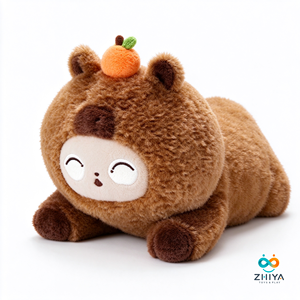
AI Talking Toy Smart Interactive Plush Voice Control APP Learning Interaction for Children Robot De Service En Silicone
- Dual-Mode BLE 5.2 + Wi-Fi Cloud
- Food-Grade Antimicrobial Silicone Core
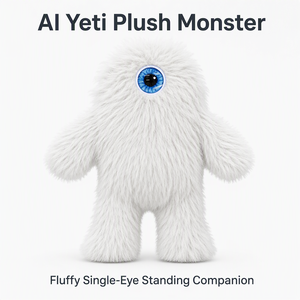
Factory AI Smart Robot Doll Childrens Learning Companion Voice-Activated Plush Toy Electronic Pet 25cm 14+ Dou Bao Gift
- Low-Power KWS Wake-Word DSP
- Contextual Memory & Dialogue Flow
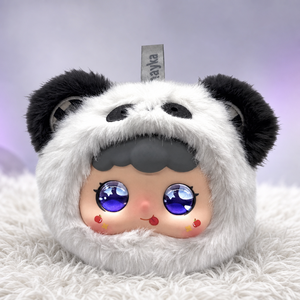
Smart AI Robot Plush Companion Interactive Talking Toy Wi-Fi Panda Rabbit Bear Language Learning Doll Wholesale
- Multi-Character Shell Tooling (Panda/Bear)
- Dynamic ESL Language Tutor Model
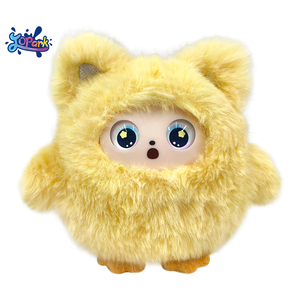
AI Plush Toy Manufacturer OEM Mini AI-powered Companion Plush Toy for Children Kid Early Education Stuffed Plushie with Tuya App
- Verified Tuya Smart Life Compatibility
- Curated Parental Dashboard Controls
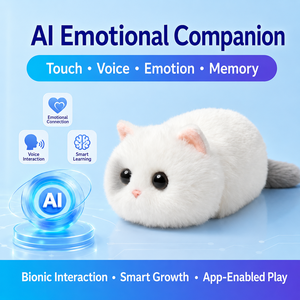
AI Toy Robot Cat Electronic Pet for Kids Smart Memory Voice Control App Enabled Learning Toy
- Capacitive Stroke & Purr Feedback
- Embedded Mood State Machine (FSM)
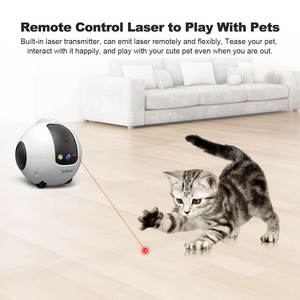
WJ-DH013 AI Pet Robot Camera Cat Toy 4MP HD Interactive Laser Tease Auto Return Charging 10000mAh Two-Way Audio
- 4MP Real-Time Neural Object Tracking
- Autonomous Auto-Docking Station
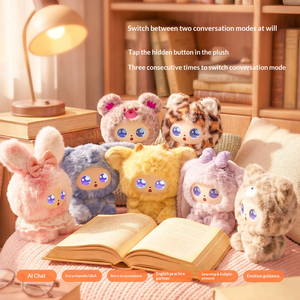
Plush AI Multi-functional Interactive Toy Encyclopedia Q&A for Children's Companionship Storytelling Learning Stylish Gift
- Hallucination-Filtered Vector RAG
- Reinforced Stitching & Child Safe Eyes
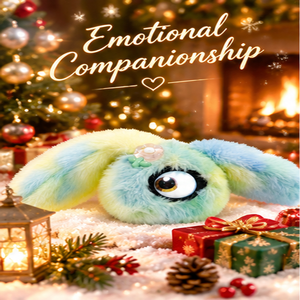
AI Educational Toy AI Companion Multilingual Voice Conversation Storytelling for Children Saimi Inteligencia Artificial
- Branching Logic Interactive Fiction
- Multi-Lingual Neural TTS Synthesis
Why Tier-1 Global Toy Importers Partner with Shenzhen AIbottoy Hub
Operating from Shenzhen's high-tech industrial corridor since 2017, we bridge the gap between traditional soft plush manufacturing and bleeding-edge IoT/AI system integration.
Tri-Tier Supply Chain Integration
An AI toy is simultaneously a plush collectible, a connected electronic device, and a secure content cloud service. We operate integrated facilities handling rapid SMT PCB assembly, high-precision injection tooling, and dust-free plush sewing under one unified ISO 9001 quality system.
12-Step Quality Inspection & AQL
We deploy strict AQL 1.0/2.5 statistical acceptance criteria across 12 distinct milestones: from incoming yarn flame-retardancy testing and needle-detection scanning to battery impedance balancing, RF sensitivity calibration, and drop-impact drop tower tests.
Global Compliance Engineering
Exporting smart hardware requires navigating intricate toy and electronic safety frameworks. Our in-house engineering team designs from day one for ASTM F963-23, EN71 parts 1-3, CPSIA, FCC Part 15B, CE RED, RoHS, and UN 38.3 lithium battery transport certification.
Engineering Feasibility & Route Selection Matrix
Transparency is foundational to our enterprise partnerships. We define technical boundaries early to eliminate development friction, providing four standardized routes depending on your capital allocation, tooling timelines, and app ecosystem requirements:
| Route Option | Underlying Architecture | Tooling / NRE Scope | Sampling Lead Time | Target B2B Importer |
|---|---|---|---|---|
| Option 01: Turnkey Standard | Mature Tuya IoT AI Core + Standard App Template | Plush Shell Patterning, Packaging & Audio Silk-Screen | 25 - 30 Days | Fast-to-market brands, retail seasonal campaigns, rapid MVP test |
| Option 02: Tooling Customized | Tuya AI Engine + Custom Face/Eyes/Housings | Custom Steel Molds for Injection Housings & LED Matrix | 40 - 50 Days | Established IP owners, bespoke character expressions, retail flagships |
| Option 03: SDK Connected | Tuya Cloud OpenAPI / Mobile SDK Pipeline | Client App Integration via Embedded Bluetooth/Wi-Fi APIs | Based on API Scope | Tech enterprises with existing iOS/Android customer apps |
| Option 04: White-Label Branded | Independent Tenant App on Tuya Cloud Engine | Custom UI/UX Reskin, Dedicated App Store & Google Play Deploy | 35 - 45 Days | Global toy brands requiring independent consumer-facing branding |
Technological Frontiers Reshaping AI-Enabled Play (2025–2030)
The global intelligent smart toys market is undergoing an unprecedented architectural paradigm shift from static, pre-recorded audio playback mechanisms to real-time Generative Artificial Intelligence and Small Language Models (SLMs).
1. From Pre-Programmed Chips to Small Language Models (SLMs)
Traditional electronic interactive toys operated on deterministic finite state machines, triggering hardcoded audio clips based on limit switches or simplistic motion sensors. Modern AI toys produced in our Shenzhen facility incorporate dedicated edge NPU co-processors paired with dynamic cloud-based Large Language Models (LLMs) and specialized on-device SLMs. This unlocks emergent, open-ended conversational intelligence, adaptive pedagogical responses, and persistent memory retention of a child's name, hobbies, and learning progress.
2. Multimodal Perception: Audio, Tactile & Machine Vision
Next-generation electronic pets require sensory multidimensionality. We engineer sensory suites that combine MEMS dual-microphone arrays with real-time beamforming DSP, multi-zone capacitive tactile skin beneath plush fur, 6-axis IMUs for tilt/cuddle detection, and ultra-low-power CMOS camera modules. Machine vision allows the toy to visually identify colored flashcards, emotional facial expressions of the user, and spatial domestic boundaries for robotic navigation.
3. Ultra-Low Latency Edge-to-Cloud Orchestration
Child interaction research indicates that conversational latency exceeding 1.2 seconds breaks the suspension of disbelief. Our firmware engineers achieve sub-800ms end-to-end latency by implementing localized keyword spotting (KWS) directly on 32-bit RISC-V microcontrollers, followed by streaming audio websockets to Tuya Cloud endpoints. The audio stream passes through high-efficiency Automatic Speech Recognition (ASR), rapid LLM inference with guardrails, and instantaneous neural Text-to-Speech (TTS) pipelines.
4. Acoustic Engineering Inside Soft Physical Bodies
Integrating sensitive microphones and high-output resonant speaker chambers inside stuffed plush toys presents severe acoustic impedance and feedback challenges. High-density polyester stuffing muffles high frequencies, while mechanical vibration from servo motors creates structural noise. We solve this through calibrated ABS acoustic isolation chambers, decoupled silicone motor mounts, and customized acoustic echo cancellation (AEC) firmware tuned specifically for plush textile dampening.
Future Procurement Trends for Professional Toy Buyers (2025–2028)
Navigating the convergence of consumer electronics supply chains and traditional toy retail requires strategic procurement foresights to safeguard margins, ensure regulatory compliance, and mitigate supply risks.
Stringent Children's Privacy Compliance
Regulatory scrutiny around connected toys has escalated dramatically worldwide. Global customs and retail giants mandate ironclad compliance with the U.S. Children's Online Privacy Protection Act (COPPA Safe Harbor), the EU General Data Protection Regulation (GDPR-K), and California's Age-Appropriate Design Code Act. Buyers must mandate zero-biometric-storage architectures, localized parent consent gateways, and encrypted cloud telemetry.
Modular Hardware & Circular Toy Lifecycles
ESG legislation in the European Union (such as the Ecodesign for Sustainable Products Regulation) is incentivizing toy brands to source modular electronics. Instead of discarding entire plush dolls when an electronic part fails or battery degrades, progressive buyers are contracting modular "core-in-plush" architectures where electronic pods can be easily detached for battery recycling, textile machine washing, and hardware upgrades.
Lithium Battery Chemistry & Global Logistics Safety
Airlines and maritime carriers enforce aggressive safety checks on lithium polymer (Li-Po) battery packs integrated within toys. Procurement teams must partner with manufacturers capable of supplying certified high-purity lithium cells equipped with redundant dual-IC Battery Management Systems (BMS) for overcharge, thermal runaway, and short-circuit prevention, accompanied by authentic UN 38.3 test summaries, MSDS, and drop-test packaging reports.
Frequently Asked Questions by Professional Toy Sourcing Managers
Comprehensive technical and commercial answers addressing MOQ, tooling ownership, cloud telemetry costs, firmware customization, and child safety certifications.
What is the standard production MOQ and prototype turnaround time?
For standard white-label OEM production using our pre-certified hardware architecture and existing tooling (Option 1), our standard Minimum Order Quantity (MOQ) is 1,000 units. Prototype physical samples with integrated functional AI electronics require approximately 25 to 30 business days. For projects requiring bespoke injection molds for faceplates, LED lenses, or robotic skeletons (Option 2), mold tooling takes roughly 35 days, followed by mass production lead times of 15 to 20 business days post-sample sign-off.
How are recurring AI Cloud and LLM API inference costs managed?
Our solutions leverage the enterprise-grade Tuya Smart Cloud PaaS infrastructure. The initial unit Bill of Materials (BOM) includes hardware provisioning and a baseline cloud token allotment for typical operational lifetimes. For enterprise brands anticipating heavy continuous daily dialogue, we offer tiered annual token bundles or assist clients in connecting via dedicated Tuya OpenAPI tenant channels, preventing surprise latency degradation or cloud service interruptions.
Can we connect our proprietary mobile app or own LLM API accounts?
To guarantee sub-second audio response latency, strict content moderation guardrails, and rock-solid supply stability, all current production runs operate within Tuya's battle-tested IoT framework. If you have an existing consumer app, we provide Option 3 (Tuya SDK integration). However, routing conversations through external, third-party unvetted API accounts outside the validated framework requires bespoke R&D evaluation, higher MOQs, and separate firmware qualification.
How does the factory protect client Intellectual Property (IP) and molds?
We execute legally binding Non-Disclosure Agreements (NDAs) subject to international jurisdiction prior to reviewing any proprietary 3D CAD files, sketches, or character artwork. All custom tooling (such as injection molds for proprietary face designs or eye frames) is registered exclusively in your company's name upon final settlement of NRE invoices. We never cross-sell OEM designs or showcase proprietary tooling to other global buyers.
What safety certifications are provided for US and European retail customs?
We coordinate formal testing through accredited ILAC-MRA labs (such as SGS, TÜV Rheinland, or Intertek). Standard compliance dossiers provided upon export include ASTM F963-23 (mechanical, flammability, heavy metals), CPSIA total lead and phthalates, EN71-1, 2, & 3, EN IEC 62115 (electric toys safety), FCC Part 15 Class B (unintentional radiators), CE RED (Radio Equipment Directive 2014/53/EU), RoHS 2.0, and UN 38.3 lithium battery transportation certification with valid MSDS.
How does the factory prevent voice audio distortion and background echo in plush toys?
Plush textiles absorb high-frequency sounds, while acoustic feedback from the internal speaker into the internal microphone causes echo loops. We design sealed ABS acoustic enclosures inside the doll that physically decouple the speaker driver from the dual-microphone array. Furthermore, our DSP firmware utilizes advanced Acoustic Echo Cancellation (AEC) algorithms and Beamforming Noise Suppression, ensuring the AI engine accurately transcribes a child's voice even in noisy living room environments.
Accelerate Your Custom AI Toy Sourcing Program Today
Consult with our Shenzhen-based R&D and supply chain engineers. Request comprehensive product specifications, factory audit certifications, tooling quotes, and our 2025/2026 AI Toy Production Catalog.
Get Catalog