Production-Ready AI Hardware Platforms
Validate your brand's AI toy concepts utilizing validated embedded modules, acoustic enclosures, and compliant IoT architectures.

Unified Tri-Layer Engineering Capabilities
Most toy factories outsource electronic PCBA design; most electronics houses fail toy mechanical safety. AIbottoy Hub bridges all three layers under single-point factory accountability.
1. Fabric & Mechanical Integration
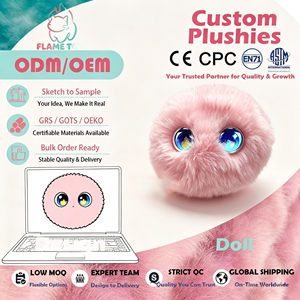
Acoustic cavity tuning engineered specifically for high-pile plush fabrics and silicone skins. We optimize dual MEMS microphone arrays with physical dampening barriers to ensure clear wake-word recognition without fabric muffling.
2. Embedded Hardware & Connectivity
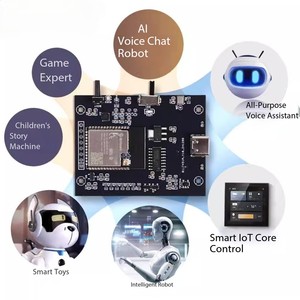
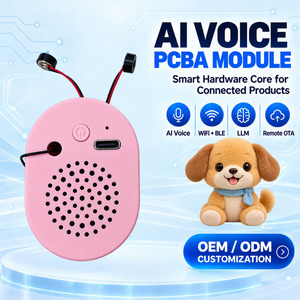
In-house PCBA layouts based on ultra-low-power ESP32-S3 and Tuya IoT core chipsets. We design onboard power management systems (PMS) ensuring low sleep-current draw and safe Li-ion charging with integrated thermal cut-offs.
3. Full Certification Governance
Comprehensive regulatory support covering physical, chemical, battery, and data vectors. We deliver turn-key UN 38.3 test summaries, SDS dossiers, and third-party laboratory pass reports for ASTM F963, EN71-1/2/3, and CPSIA.
Systematic AI Toy Prototyping Paths
Avoid multi-million-dollar software sinkholes. Select a proven development route tailored to your capital structure, go-to-market speed, and intellectual property requirements.
Option 1: Proven Core
Standard Tuya-based companion app with custom plush exterior and branding. Minimal software risk.
Option 2: Custom Face Tooling
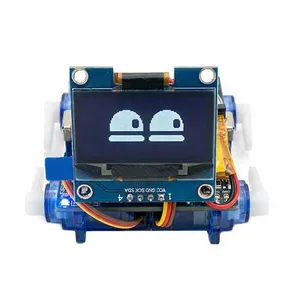
Standard app architecture paired with bespoke injection molds for animated LED eyes or custom facial articulation.
Option 3: Tuya SDK Integration
Leverage our production-validated hardware connected to your pre-existing brand mobile application via Tuya SDK.
Option 4: Branded Ecosystem
A fully whitelabeled, custom-skinned application published under your brand on iOS and Android marketplaces.
| Prototyping Route | Firmware / Cloud Base | Enclosure Customization | Lead Time to Prototype | Ideal Sourcing Strategy |
|---|---|---|---|---|
| Route 01: Core Adaptation | Tuya Smart Life Ecosystem | Plush Pattern, Embroidery, Packaging | 25–30 Business Days | Speed to market; retail dropship validation |
| Route 02: Tooling & Mold | Tuya Core + Matrix Expressions | Custom Hard ABS/Silicone Shell & LED | 40–50 Tooling Days | Proprietary character IP differentiation |
| Route 03: Native App Bridge | Tuya OpenAPI / Mobile SDK | Hybrid Hard-Soft Mechanical Enclosure | Dependent on Client SDK Sprint | Existing digital ecosystem extension |
| Route 04: Turn-key Brand App | Tuya Dedicated Cloud Tenant | Full Custom Aesthetic & Mechanical | 60–75 Days Total Deployment | High-tier direct-to-consumer brand launches |
In-House Engineering Scope
- Custom plush outer shell modeling, patterning, and sewing automation
- Dual-mic acoustic chamber development with noise cancellation baffling
- LED emotional-eye matrix prototyping (SPI/I2C driven dynamic animatics)
- Tuya AI cloud architecture configuration (66 multilingual voice setups)
- UN 38.3 lithium battery safety pack integration with built-in BMS
- Full factory-level functional testing: drop test, seam test, pairing QA
Excluded / Non-Supported Frameworks
- Zero-budget ground-up LLM model training and dedicated server hosting
- Direct integration with private unverified 3rd-party LLM cloud API endpoints
- Complete rebuild of low-level BLE/Wi-Fi wireless communication protocols
- Hardware designs exceeding small-parts safety thresholds for sub-36mo kids
- Non-disclosure breaches regarding tooling owned exclusively by prior clients
The Evolution of Intelligent Toy Manufacturing: 2025–2030
An authoritative technical whitepaper on shifting procurement dynamics, edge AI processing, privacy legislation, and total supply-chain risk mitigation.
The global intelligent toy industry is experiencing a profound paradigm shift. Valued between USD 18.1 billion and USD 19.3 billion, the market is rapidly migrating from pre-recorded reactive silicon sound-chips toward dynamic, real-time conversational agents. For international procurement managers, brand licensors, and hardware engineers, sourcing in this hybrid category requires navigating the convergence of soft-goods manufacturing, high-density consumer electronics, and real-time cloud data pipelines.
1. Critical Technological Sourcing Trends
A. Migration from Cloud-Centric to Hybrid Edge-Cloud Inference
Early-generation conversational toys relied exclusively on routing uncompressed audio buffers to remote cloud speech-to-text (STT) services, resulting in high round-trip latency (often 2.5 to 4.0 seconds) and excessive server maintenance costs. Advanced prototyping today focuses on hybrid-edge architectures.
Using high-efficiency edge microcontrollers such as the ESP32-S3 or dedicated neural-network audio coprocessors, modern prototypes execute local wake-word recognition, acoustic noise suppression, and preliminary offline intent parsing directly on the toy. Only enriched conversational tokens are streamed over low-power Wi-Fi to models like DeepSeek or ChatGPT, slashing latency to under 800 milliseconds and radically improving the physical-to-digital illusion of life.
B. Dynamic Expressive Hardware Interfaces (Beyond Static Speakers)
Voice-only interaction is insufficient to maintain child engagement over 30-day retention curves. Prototyping pipelines are prioritizing synchronized multi-sensory feedback loops:
- Acoustic Cavity Isolation: Isolating 28mm–40mm Mylar speakers from internal microphone pickups within soft plush bodies to completely eradicate audio feedback echo.
- Sub-Surface Display Matrices: Integrating flexible micro-OLED or diffused RGB LED grids under translucent plush or soft silicone skins to render blinking, emotional changes, and attention states without exposed rigid bezels.
- Capacitive Touch Zoning: Embedding conductive fabric arrays along the toy's head, paws, or torso to trigger distinct motor and audio responses upon petting, creating authentic pet-like tactile responsiveness.
2. Global Regulatory Compliance & Children's Privacy Shielding
Prototyping an AI toy for North American and European Union jurisdictions involves navigating stringent legal minefields. Sourcing teams must demand multi-layer compliance verification early in the prototyping phase:
- COPPA & GDPR-K Adherence: Voice data must not be permanently stored, cross-profiled, or used for model training without verified parental consent. Hardware prototypes engineered by AIbottoy Hub utilize secure credential enclaves and ephemeral audio buffering where voice data is immediately expunged post-inference.
- Mechanical Small Parts & Battery Chambers (ASTM F963 / EN71): Connected smart toys are subject to rigorous drop, torque, and pull tests. Any rigid battery housing or core box must survive repeated 3-foot drops onto concrete without exposing the internal lithium-ion cell or generating sharp edges.
- Battery Transport Certification (UN 38.3): Lithium polymer cells require rigorous thermal, vibration, shock, short-circuit, and overcharge test documentation. We provide accredited UN 38.3 test summaries alongside compliant packaging to prevent costly customs impoundments during air or ocean freight.
3. Procurement Best Practices for Wholesale AI Prototypes
When selecting a manufacturing partner in China's Greater Bay Area, avoid plush factories that treat electronics as an afterthought or electronics assemblers that lack in-house sewing lines. Implement these validation benchmarks:
- Audit Acoustic Engineering in Soft Mockups: Test prototype microphone pickup clarity when the enclosure is fully stuffed with standard PP cotton. Ensure the factory conducts in-house frequency response analysis.
- Mandate Modular Hardware Tooling: Construct internal core injection molds with universal mounting bosses. This allows future PCBA upgrades (e.g., migrating from BLE-only to Dual Wi-Fi/BLE chipsets) without scrapping expensive plastic injection tooling.
- Establish Strict Factory AQL Standards: Enforce separate AQL criteria for cosmetic plush finish (AQL 2.5) and electronic performance (AQL 1.0 critical zero-defect on lithium safety circuits and pairing modules).
Frequently Asked Sourcing & Engineering Questions
Clear, direct answers regarding prototype engineering, app whitelabeling, export compliance, and production turnarounds.
What languages can your AI toy prototypes and accompanying apps support?
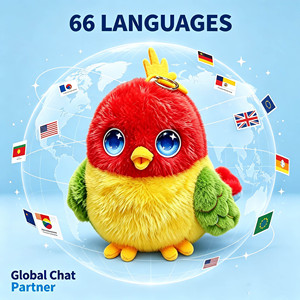
Our standard production configuration supports 66 global languages enabled directly via cloud parameters during OEM setup. Default builds ship in English, with turnkey localization options for German, French, Spanish (European & Latin American dialects), Portuguese (Brazilian & Iberian), Italian, Japanese, Korean, Arabic, Russian, and 57 additional localized language profiles.
Can our software engineering team connect our proprietary mobile app to your hardware?
Yes. We provide complete integration support using the official Tuya OpenAPI and Mobile Device SDKs. This enables your internal development team to manage user identity, device pairing, telemetry, and content delivery inside your native mobile application while leveraging our production-tested hardware architecture.
What documentation do you provide for international lithium battery shipping?
Every battery-equipped prototype and production batch is accompanied by comprehensive compliance dossiers: UN 38.3 Test Summaries, MSDS/SDS sheets, drop-test reports, and air/sea transport declaration forms compliant with IATA-DGR and IMO-IMDG regulations for seamless customs clearance in the US, EU, UK, and Australia.
What is the typical turnaround timeline for custom-tooled AI toy prototypes?
For projects utilizing our validated internal electronics and custom exterior plush pattern development (Option 1), functional prototypes ship in 25–30 calendar days. For projects requiring brand-new steel tooling for custom facial enclosures, animated eye apertures, or silicone parts (Option 2), complete T1 tooling samples are delivered in 40–50 calendar days.
How do you safeguard client intellectual property and design exclusivity?
We execute enforceable bilateral Non-Disclosure Agreements (NDAs) prior to receiving client 3D CAD files or plush pattern sketches. Injection molds, proprietary artwork, voice persona datasets, and custom tooling remain the exclusive legal property of the client and are never showcased in public catalogs or repurposed for competitor manufacturing runs.
Kickstart Your Custom AI Toy Engineering Sprint
Send our Shenzhen engineering team your 3D CAD models, plush concept art, or feature matrix. We review feasibility, BOM structure, and certification requirements within 24–48 hours.
Get a Quote