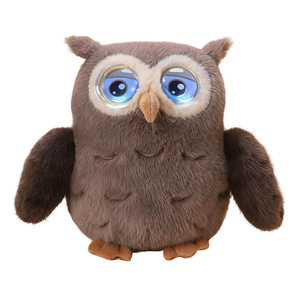
Enterprise Hardware Lineup
Featured AI Companion Hardware & Smart Interactive Products
Direct from our Shenzhen ISO 9001 factory floor: explore generative AI modules, smart robotic systems, and emotional companion toys available for custom turnkey OEM packaging and white-label manufacturing.
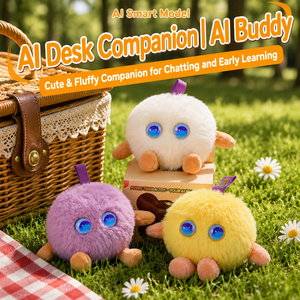
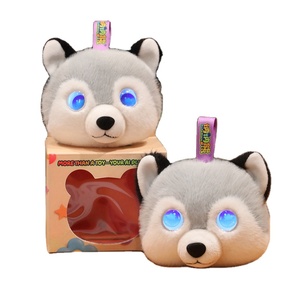
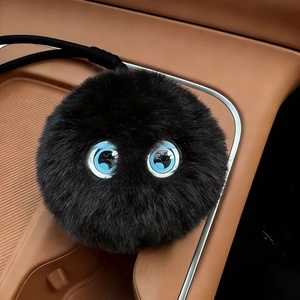
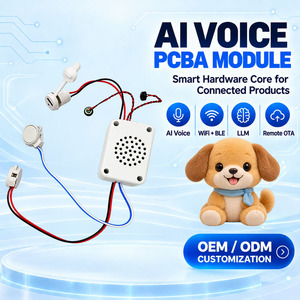
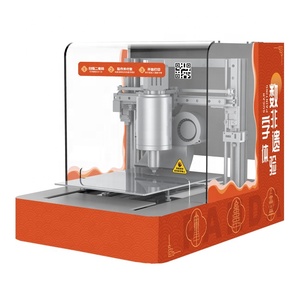
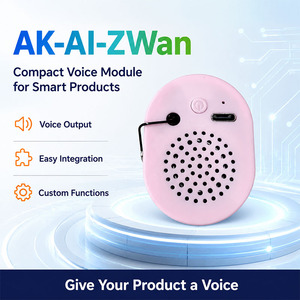
Executive Summary & Semantic Scope: As generative AI, edge computing, and real-time natural language processing (NLP) migrate into children's playware and emotional robotics, packaging design transcends simple corrugated protection. In modern consumer electronics manufacturing, the packaging box acts as an interactive RF-transparent interface, a child-resistant regulatory shield, a thermo-acoustic damping vessel, and an unboxing journey that drives direct companion app onboarding. Shenzhen AIbottoyhub Technology Co., Ltd. presents the industry standard for custom OEM/ODM AI toy packaging engineering.
1. The Strategic Paradigm Shift in Custom OEM AI Toy Packaging Design
In traditional toy manufacturing, retail packaging serves two baseline roles: structural containment and visual shelf persuasion. However, for intelligent products—such as generative voice-chat companions, Wi-Fi/BLE-connected plush robots, and LCD emotional pet dolls—packaging must be treated as an essential sub-system of the hardware itself. Sourcing managers and industrial designers must navigate the complex convergence of three distinct product domains: high-safety juvenile toys, sensitive wireless consumer electronics, and continuous cloud-based content services.
When an end-consumer receives an AI-enabled toy, the packaging container governs the initial device pairing sequence, safeguards sensitive multi-axis sensor calibrations against transit vibrations, protects exposed TFT or LCD display lenses from pressure deformation, and ensures built-in rechargeable lithium-ion cells remain dormant without parasitic circuit discharge. An inferior packaging blueprint does not merely elevate return rates due to aesthetic dents—it results in catastrophic field failures, such as fractured microphone diaphragm suspension, internal antenna detuning, failed customs clearance due to deficient battery documentation, and high customer churn triggered by confusing app onboarding flows.
Electromagnetic & RF Transparency
Carefully engineered antenna windows and non-metallic dielectric coatings prevent Wi-Fi (2.4GHz) and BLE signal shielding, enabling "Try-Me" pairing or automated factory flashing right through the blister package without unsealing.
Multi-Tier Shock & Acoustic Damping
Custom molded pulp (PMP) or high-density thermoformed EVA/RPET trays isolate mic capsules and MEMS gyroscopes from intense ISTA-3A/6-Amazon vibration tests, preserving acoustic calibration integrity.
Global Compliance Architecture
Turnkey pre-printed typography incorporating mandatory FCC/CE radio declarations, WEEE disposal icons, toxic heavy-metal restrictions (RoHS), UN 38.3 lithium hazard placards, and EN71/ASTM mechanical age-grading warnings.
2. Structural Engineering Challenges Specific to Smart AI Toys
Packaging an AI toy presents physical challenges that pure plush factories or commercial box-printers simply cannot solve independently. Drawing from over 200 bespoke OEM projects executed at our Shenzhen facilities, our engineering teams address four critical packaging friction points:
A. Micro-Electro-Mechanical Systems (MEMS) and Optical Protection
Unlike standard stuffed bears or static plastic figurines, an AI companion toy—such as our CuriPal AI Smart Plush Owl or AI Husky Doll—incorporates sensitive electronics within its soft exterior. The head typically integrates dual MEMS microphone arrays, a front-facing camera or optical sensor, a micro-speaker driver, and custom LCD/OLED displays functioning as dynamic emotive eyes. If external shock compresses the plush face during palletized maritime shipment, excessive force transfers directly to the internal ABS skeleton and display mounting brackets. Our packaging design teams engineer rigid inner cavity collars made of FSC-certified virgin kraft board or contoured thermoformed RPET inserts that suspend the toy’s optical module at a minimum clearance of 12mm from all external box walls, mitigating shock spikes exceeding 30G.
B. Battery Safety Isolation and Dormancy Locks
Modern AI toys feature integrated 18650 or prismatic Lithium Polymer (Li-Po) battery packs ranging from 1200mAh to 3000mAh to satisfy the high power draw of continuous Wi-Fi transmission and digital audio synthesis. International shipping guidelines (U.S. DOT 49 CFR, IATA Dangerous Goods Regulations Section II of PI967, and IMDG Special Provision 188) mandate that battery-powered consumer devices must be protected against accidental activation during transit. An AI toy that accidentally wakes up inside a dark shipping container, loops its wake-word algorithm, and depletes its cell below the low-voltage cutoff threshold (2.5V) risks permanent battery degradation before reaching the buyer's warehouse. Our custom packaging designs introduce physical dielectric pull-tabs (battery disconnect bridges), recessed master-switch lockouts within carton cutaways, and specialized packaging geometry that shields capacitive touch zones from compression triggers.
C. Acoustic Transparency for In-Store Retail "Try-Me" Modes
Retail chains like Walmart, Target, and European department stores increasingly demand functional "Try-Me" window boxes where parents and children can interact with voice AI features prior to purchase. Creating a functional "Try-Me" window box for an AI device requires precise acoustic aperture alignment. If the cardboard aperture restricts sound propagation, the toy’s signal-to-noise ratio (SNR) plummets, causing high wake-word failure rates under ambient retail noise (65–75 dB). Our packaging structural engineers utilize laser-cut, micro-perforated sound transmission grilles coupled with dust-proof acoustic scrims that achieve 96% acoustic transparency between 250Hz and 8kHz, allowing the toy's natural voice processing engine to recognize human interaction effortlessly without compromising dust ingress protection (IP5X).
3. Development Routes: From Ready-to-Ship Tooling to Proprietary Custom Molds
Procuring AI toys and custom packaging requires a disciplined balance between tooling expenditures, time-to-market constraints, and custom branding needs. Through our industrial alliance at AIbottoy Hub, we provide four standard OEM/ODM development paths configured to protect corporate capital and eliminate architectural rework:
| Development Route | Packaging Architecture & Hardware Framework | Tooling / NRE Investment | Prototyping Lead Time | Recommended Sourcing Scenario |
|---|---|---|---|---|
| Route 01: Turnkey Standardized | Existing master dies and blister molds; custom 4C/6C litho-laminated CMYK printing, custom spot UV, foil stamping, localized quick-start manuals. | USD 350 – 400 (Offset sample setup) | 15 – 20 Days | Ideal for emerging brands and Amazon FBA operators requiring fast seasonal rollout with zero risk of structural failure. |
| Route 02: Custom Mold & Display | Bespoke face structure, custom injection-molded chassis, custom clamshell blister + magnetic closure presentation gift box with clear PET window. | From USD 10,000 (Steel molds & tooling) | 40 – 50 Days | Established retail toy brands creating exclusive IP characters with bespoke dynamic LCD display geometries and collectible packaging. |
| Route 03: Private App SDK Bridge | Proprietary hardware form factor, standardized packaging footprint, customized inner foam damping, Tuya IoT SDK integration with client's ecosystem. | USD 12,000 (Software SDK setup) | App Readiness Dependent | Enterprise clients possessing their own customer-facing mobile application who require direct BLE/Wi-Fi onboarding via custom packaging QR codes. |
| Route 04: Full Custom Brand Launch | Comprehensive corporate identity overhaul: bespoke app published under client’s Apple/Google developer accounts, custom rigid luxury gift packaging with EVA velvet inserts. | From USD 14,000 (Full ecosystem deployment) | Scope Dependent | High-end educational publishers and lifestyle consumer brands seeking total brand equity, recurring software monetization, and premium unboxing. |
4. Future Procurement and Technological Trends in AI Toy Packaging (2025–2030)
As corporate sustainability directives intersect with the exponential rise of generative AI, packaging procurement officers must adapt to emerging manufacturing paradigms. Sourcing directors should prioritize four critical trends over the coming purchasing cycles:
A. Sustainable, Molded Fiber Monomaterials (Plastic-Free Mandates)
With the European Union tightening the Packaging and Packaging Waste Regulation (PPWR) and North American jurisdictions enacting Extended Producer Responsibility (EPR) legislation, the days of multi-layer PVC blister packaging are coming to an end. Leading AI toy manufacturers are transitioning toward 100% recyclable molded bamboo pulp, sugarcane bagasse, and thermocompressed dry-fiber shells. These monomaterials achieve dimensional stability capable of securing 1.5kg electronic plush products without relying on single-use plastic twist-ties or adhesive tapes.
B. Interactive Smart Packaging via Near Field Communication (NFC)
To streamline frictionless companion app installation, next-generation packaging incorporates paper-thin, dry-inlay NFC tags sandwiched between corrugated fluting layers. By simply tapping their smartphone against the exterior retail box, the parent initiates an immediate cryptographic handshake: the device automatically downloads the Tuya-powered companion app, authenticates device registration, and provisions Wi-Fi network credentials before the child even removes the toy from the packaging carton.
C. Dynamic Thermal Dissipation for High-Performance Edge Processors
As on-device neural processing units (NPUs) handle real-time voice synthesis and localized vision recognition, onboard microcontrollers dissipate higher thermal loads during charging and battery conditioning tests. Custom packaging must integrate strategically engineered convection ventilation vents within outer protective sleeves to prevent heat accumulation during automated end-of-line high-voltage factory charging cycles.
5. Enterprise Factory Advantages: Why Global Buyers Partner with AIbottoy Hub
Shenzhen AIbottoyhub Technology Co., Ltd. (operating in Guangming District, Shenzhen) represents a tier-one manufacturing consortium bridging plush craftsmanship, precision electronic tooling, and intelligent software deployment. By choosing our vertically integrated facility, global B2B buyers access distinct industrial advantages:
- Single-Point Engineering Accountability: We eliminate the operational friction of coordinating between separate plush sewing shops, PCBA surface mount technology (SMT) vendors, and paper printing houses. Our in-house engineering team designs the product chassis, tunes the acoustic chamber, codes the Tuya firmware, and manufactures the custom retail packaging concurrently.
- Rigorous 12-Step Quality Assurance Architecture: Every unit passes through our military-grade QA framework. Incoming electronic components undergo thermal cycling and drop tests; stitched shells face mechanical tensile checks for seams and small-part pull force (>90N); fully assembled units complete voice frequency response verification, Wi-Fi sensitivity testing, and carton-level ISTA-2A transit drop verification.
- Direct Laboratory Compliance Management: We maintain deep partnerships with globally accredited testing bodies including SGS, Intertek, and TÜV Rheinland. We manage full compliance verification for ASTM F963 (US), EN71 Parts 1, 2, and 3 (EU), CPSIA toxicological screening, FCC Part 15B/15C, RED directives, and complete UN 38.3 lithium transport dossiers.
- Rock-Solid IP Protection & Bilateral NDAs: We operate under enforceable Bilateral Non-Disclosure Agreements. We never showcase OEM clients' proprietary mold designs, vector dielines, artwork assets, or custom audio scripts on open wholesale marketplaces or trade displays. Your unique design remains your exclusive competitive asset.
6. Frequently Asked Questions (FAQ) for Global B2B Sourcing Teams
What languages can the AI companion firmware and packaging support?
A: English serves as our default production baseline. Our Tuya-powered enterprise architecture supports 66 global languages—including German, French, Spanish, Portuguese, Italian, Dutch, Polish, Russian, Turkish, Arabic, Japanese, Korean, Hindi, and Vietnamese. Packaging dielines, manuals, and regulatory typography can be localized concurrently across multiple target jurisdictions.
Can our packaging include custom QR codes that bypass third-party platforms?
A: Absolutely. When selecting Route 04 (Branded App Launch), your packaging dieline can feature dynamic deep-linking QR codes pointing directly to your own Apple App Store and Google Play URLs, ensuring total ownership of your digital customer relationship from unboxing onward.
How do you certify lithium battery transport compliance for air and sea cargo?
A: Every rechargeable battery model we manufacture undergoes complete testing to generate UN 38.3 test summaries, Material Safety Data Sheets (MSDS), and sea/air transport condition declarations. We prepare complete dangerous goods documentation to clear freight forwarding scrutiny smoothly.
What are your standard production and prototyping lead times?
A: Standard offset-printed packaging and functional AI toy sampling requires 25 to 30 days. Mass production runs for standard MOQ orders typically ship within 15 to 20 business days after client sample sign-off. Projects requiring bespoke plastic injection tooling require approximately 40 to 50 days.
What vector files must our creative team supply to start packaging layout?
A: We accept Adobe Illustrator (.AI), CDR, or high-resolution layered PDF files. Our packaging engineers will supply your design department with precise, CAD-generated 1:1 scale dielines incorporating trim lines, fold scores, bleed allowances (3mm), spot varnish masks, and window cutouts.
Do you support on-site or third-party quality inspections prior to final payment?
A: Yes, we welcome third-party inspection firms (e.g., QIMA, SGS, Bureau Veritas) to inspect mass production lots at our Shenzhen facility under standard AQL 1.0 (Critical) / 2.5 (Major) / 4.0 (Minor) criteria before carton sealing and pallet dispatch.