Engineered AI Toy Prototypes & Production-Ready Reference Models
From concept sketch to retail shelf: explore our field-tested smart conversational plushies, 3D additive design engines, robotic vision nodes, and automated interactive educational hardware.
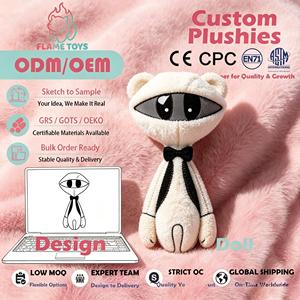
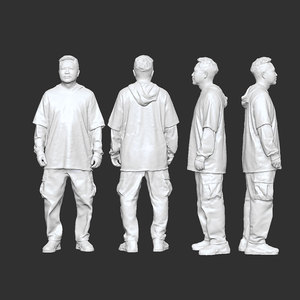
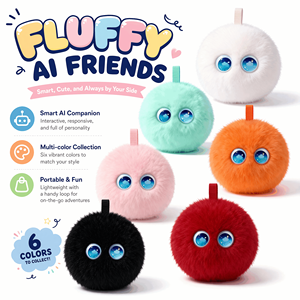
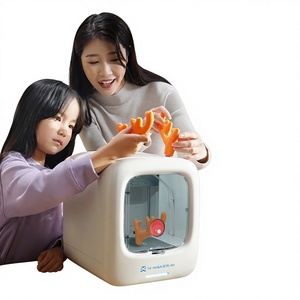
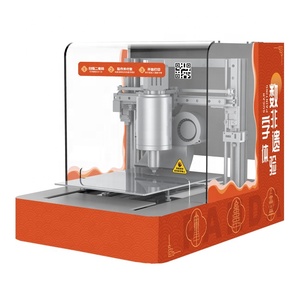
AI Smart Automatic Plastic 3D Printer Pen SD-1 Handmade Toy for Ages 8+
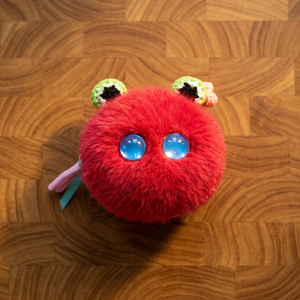
OEM Kids AI Toys Rechargeable LLM AI Chat LED Eyes Real-time Robot
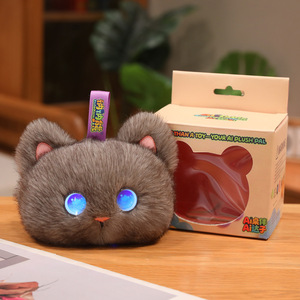

How We Transform Concept Sketches into Mass-Manufactured AI Toys
Unlike conventional plush manufacturers that struggle with microelectronics or electronics assemblers lacking soft-goods craftsmanship, our Shenzhen facility integrates industrial ID sculpturing, PCB layout design, acoustic tuning, Tuya cloud firmware flashing, and robotic assembly under one roof.
2D Concept to Parametric 3D CAD
We take your hand-drawn sketch, 2D vector, or character concept sheet and create production-ready 3D surface files (STEP/IGES/OBJ). We calculate skin wall thicknesses, internal skeleton articulation points, snap-fits, and internal thermal airflow pathways.
Clay Sculpting & Rapid SLA Prototype
Within 5 to 7 business days, our physical modeling lab produces a tangible 1:1 functional prototype using high-precision SLA/SLS resin and bespoke stitched plush skins. This allows immediate testing of ergonomic handfeel, weight balance, and physical charm.
Custom PCBA Architecture & Firmware
Our electrical engineering team optimizes microcontroller selection (ESP32-S3 / Dual-Core Xtensa LX7), MEMS digital noise-canceling microphone arrays, resonant cavity acoustics, and power management circuits (PMIC) with multi-stage lithium battery safety guards.
Steel Tooling & Injection Molding
High-grade hardened steel injection molds (NAK80 / S136) engineered for 500,000+ cycle lifespans. We maintain tolerances down to ±0.02mm for screen bezels, moving eye mechanisms, and interlocking battery compartment child-safety screw housings.
Acoustic Tuning & Shell Decoupling
Sound fidelity often degrades inside dense plush filling. We engineer dedicated acoustic Helmholtz resonance chambers and isolated microphone isolation rings that eliminate motor vibration noise and deliver crystal-clear voice pickup from up to 3 meters.
Batch SMT, Ultrasonic Welding & QC
High-speed SMT placement lines followed by automated optical inspection (AOI). Final assembly combines lead-free ultrasonic plastic welding, pull-force testing on eye beads (exceeding 90N), 100% wireless RF calibration, and AQL 1.0/2.5 pre-shipment signoff.
Choose the Optimal AI Toy Sourcing & Manufacturing Route
Eliminate speculative R&D costs. We offer four transparent engineering tracks tailored to your brand’s capital expenditure strategy, design exclusivity needs, and target time-to-market.
Standard Core + Bespoke Plush Shell
Deploy our pre-certified hardware architecture and pre-configured Tuya app stack. Customize 100% of the external plush shell, embroidery, voice identity, and retail packaging.
Standard App + Bespoke Head & Eyes Mold
Retain our mature wireless PCBA core while investing in unique tooling for custom facial contours, expressive LED/OLED matrix screens, or articulated plastic movable limbs.
Factory Hardware + Client App Integration
Integrate our certified smart AI toy hardware directly into your enterprise mobile application ecosystem utilizing robust Tuya Cloud OpenAPIs and Bluetooth BLE client SDKs.
Turnkey Bespoke Hardware & Branded App
End-to-end proprietary development. Custom mold, custom firmware persona, and a fully branded companion app published to the Apple App Store and Google Play under your corporate developer credentials.
| Evaluation Parameter | Route 01 (Pre-Set Core) | Route 02 (Custom Face Mold) | Route 03 (API / SDK Direct) | Route 04 (Full Custom White-Label) |
|---|---|---|---|---|
| Typical Tooling Investment | $0 (Uses Standard Housing) | $8,500 – $14,000 | Firmware licensing only | $14,000 – $25,000+ |
| Prototyping Lead Time | 20 – 25 Days | 35 – 45 Days | 25 – 30 Days | 50 – 60 Days |
| Mass Production Cycle | 15 – 20 Days (Standard MOQ) | 25 – 30 Days | 20 – 25 Days | 35 – 40 Days |
| Software Ecosystem | Tuya Smart Life Framework | Tuya Smart Life Framework | Client's Native Infrastructure | Dedicated Standalone App Store App |
| Recommended MOQ | 500 – 1,000 Units | 2,000 – 3,000 Units | 2,000 Units | 3,000 – 5,000 Units |
| Regulatory Approval Path | Pre-certified RF Module | Pre-certified RF + Physical Lab Test | Pre-certified Module | Comprehensive Full-Device Certifications |
Macro Technological Shifts & Global AI Toy Sourcing Trends
The smart toy industry is shifting rapidly from primitive pre-recorded IC sound chips to real-time, context-aware LLM agents. Brand directors and procurement executives must navigate key technical transitions to ensure product relevance and compliance over multi-year sales cycles.
Edge-Cloud Hybrid Inference
Pure cloud architectures suffer from high latency and connectivity dropouts. The next generation of OEM AI toys relies on hybrid architectures: on-device micro-wake-word models (running on low-power NPU chips) combined with cloud LLMs for rich storytelling. This cuts latency below 800ms and reduces idle battery consumption by up to 65%.
COPPA 2.0 & Child Privacy Mandates
Global customs authorities and consumer safety bodies (FTC in the USA, ENISA in Europe) are enforcing stringent privacy rules for child-facing devices. Procurement strategies must prioritize suppliers that use zero-data-retention speech pipelines, physical microphone cut-off switches, and AES-256 encrypted local credential storage.
Multimodal Affective Computing
Future interactive companions are moving beyond voice-only interaction. By pairing capacitive touch sensors across plush ears and bellies with 6-axis IMU gyroscopes, toys can sense when they are hugged, shaken, or dropped. Micro-OLED expressive eye modules sync dynamic animations with speech prosody to build genuine emotional connections.
OTA Content Monetization Models
Hardware sales are no longer the finish line. B2B toy brands now design companion apps that offer downloadable story bundles, premium dialect modules, and seasonal character behavior updates. Sourcing partners must deliver stable, secure OTA (Over-The-Air) firmware update infrastructure to protect long-term recurring revenue streams.
Stringent Battery Logistics (UN 38.3)
Strict airline and sea cargo oversight for lithium-polymer batteries requires comprehensive safety documentation. Experienced factories provide complete UN 38.3 test summaries, UL 1642 cell reports, and drop-tested master cartons right out of the box, ensuring friction-free global customs clearance without costly freight delays.
Eco-Plush & Circular Substrates
Consumer electronics and soft toys face rising scrutiny regarding plastic waste. Leading procurement groups now require GRS-certified (Global Recycled Standard) rPET plush fabrics, bio-based PLA plastic skeletons, and screw-disassembled modular electronics to support end-of-life recycling and meet European CSRD compliance.
Why International Toy Brands Rely on Our Shenzhen Manufacturing Plant
Founded in 2017 in the Guangming high-tech manufacturing corridor of Shenzhen, our facility bridges high-volume plastic injection, automated surface-mount electronics, and artisan soft plush assembly.
Comprehensive Compliance
Our production lines operate under ISO 9001 and ICTI Ethical Toy Program standards. Every toy series is engineered to pass EN71 (Parts 1, 2, 3), ASTM F963-23, CPSIA, CE-RED, FCC ID, and RoHS testing at accredited international labs like SGS, TÜV, and Intertek.
66-Language LLM Localization
Expand globally without rebuilding software stacks. Through our mature Tuya AI integration, our smart toys support 66 languages and regional dialects out-of-the-box, including English, Spanish, German, French, Japanese, Arabic, and Hindi with localized accents.
Full Battery Documentation
Say goodbye to air freight delays. We manage all lithium battery transport requirements directly, providing genuine UN 38.3 test summaries, 1.2m drop packaging test certificates, MSDS/SDS sheets, and sea/air transport condition evaluations for immediate forwarding.
Rigorous NDA & IP Protection
Your intellectual property stays secure. We routinely sign binding bi-lingual NDAs before reviewing proprietary sketches. Your custom steel molds, plush patterns, and character assets are assigned dedicated tooling codes and never shared or resold to third parties.
12-Stage In-Line Quality Assurance
From needle-detection screening (eliminating broken metal fragments) and tensile seam checks to RF spectral testing, voice acoustic response verification, and burn-in aging for power management chips, we catch defects on the line before final packaging.
Flexible Private Label Packaging
Ship directly to retail distribution centers. We offer full packaging customization, including spot-UV window gift boxes, eco-friendly blister trays, multi-language user manuals, retail barcodes (UPC/EAN), Amazon FBA master carton labels, and serialized tracking.
Frequently Asked Questions on AI Toy Manufacturing & Supply Chains
Essential technical and commercial answers for sourcing directors, IP license holders, and product managers preparing an AI toy manufacturing run.
What is the typical development timeline from 2D sketch to retail production?
A standard project takes 20 to 25 days for initial working prototypes using rapid 3D printing and master sample sewing. If custom injection mold tooling is required (for head structures, dynamic eye frames, or moving parts), mold fabrication takes 35 to 45 days. Mass production typically requires 15 to 25 days depending on the order volume.
Can we connect our proprietary AI model or private cloud database?
Yes. While our standard offering runs on our pre-optimized Tuya AI cloud infrastructure (ensuring proven stability, rapid deployment, and multi-language support), clients using Route 03 or Route 04 can connect to private models or custom server endpoints using Tuya Cloud OpenAPIs or custom ESP32 firmware stacks.
What files are required to receive an accurate tooling and BOM quote?
To provide an itemized Bill of Materials (BOM) and NRE tooling estimate, please provide: 1) 2D orthographic drawings or 3D files (STEP, STP, IGES, or OBJ); 2) Target product dimensions; 3) Functional requirements (voice pickup range, moving motors, eye display type, app connectivity); and 4) Projected order quantities and target market regions.
How do you address safety standards for children's smart toys?
We practice "Safe-by-Design" engineering. Physical components comply with ASTM F963-23 and EN71-1 small parts, sharp point, and torque/tension regulations. Electronic boards use low-voltage current-limiting circuits, flame-retardant ABS-V0 plastic enclosures, and double-insulated battery compartments equipped with PTC self-resetting fuses.
What are your minimum order quantities (MOQs) for custom manufacturing?
For Route 01 (utilizing our established internal hardware platform with custom plush skin, embroidery, and packaging), the standard MOQ is 500 to 1,000 units. For Route 02 and Route 04 (involving custom steel injection tooling and dedicated firmware/app branding), the standard production run starts at 2,000 to 3,000 units to balance mold amortization.
How are international shipping and battery compliance handled?
Our team handles complete export documentation for consumer lithium electronics. All shipments include certified UN 38.3 test summaries, Material Safety Data Sheets (MSDS), and strict drop-test packaging compliance. We support EXW, FOB Shenzhen/Hong Kong, CIF, and DDP deliveries directly to your regional warehouse.
Bring Your AI Toy Vision to Life with Our Engineering Team
Send us your concept sketches, functional specifications, or RFQ brief. Our engineering and sourcing specialists will review your project and return a detailed DFM (Design for Manufacturability) analysis, tooling estimate, and production roadmap within 24 to 48 hours.