High-Precision Visual & Interactive AI Hardware Showcase
Explore production-tested smart hardware platforms engineered with expressive dynamic eye visualizations, computer vision tracking, multi-modal voice processing, and edge robotics.
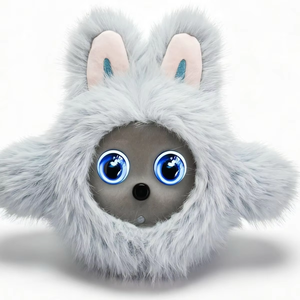
- Dynamic Micro-TFT/LCD Emotional Eyes
- PIR Motion & Infrared Distance Sensing
- Multi-Modal Tuya AI Cloud Connectivity

- Full-Duplex Noise-Canceling Microphone Array
- 66-Language LLM Natural Dialogue Pipeline
- Dual-Band Wi-Fi / Bluetooth Low Energy 5.2
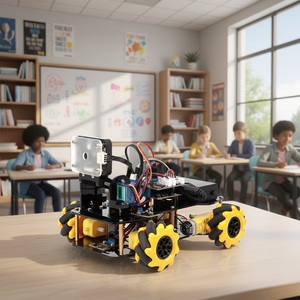
- ESP32-CAM Machine Vision Tracking Module
- OpenCV Line, Color & Face Recognition
- Python / C++ / Scratch Graphical Programming
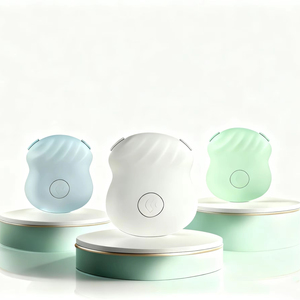
- Ultra-Low Latency Cloud TTS Engine (<800ms)
- Parent Portal with Content Filtering & Quotas
- Ruggedized Food-Grade Anti-Drop ABS Shell
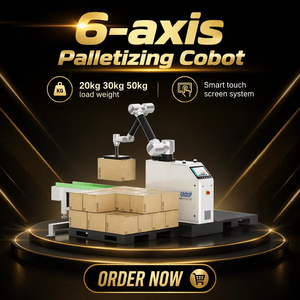
- 6-DOF Industrial Kinematic Precision Control
- Visual Servoing & Trajectory Machine Learning
- ROS Compatibility & Industrial Gripper End-Effector
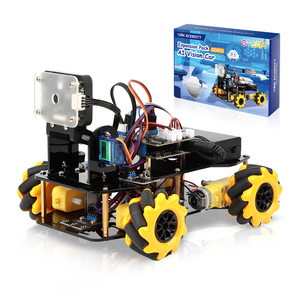
- Real-Time FPV Wi-Fi Stream with Telemetry
- Ultrasonic Obstacle Avoidance + Target Tracking
- Complete Open-Source Arduino Curriculum Included
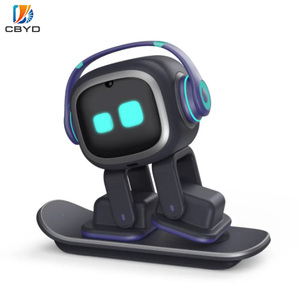
- Multi-Sensor Self-Navigating Charging Base
- 1000+ Algorithmic Facial Eye States & Mood Engine
- Built-in Neural Processing Core & Optical Drop Sensors
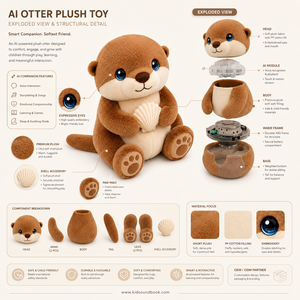
- Comprehensive 3D Industrial Concept to Mass Tooling
- Cleanroom Plush Skin Tailoring & Thermal Acoustic Foam
- ISO 9001, ICTI, ASTM F963, EN71-Ready Engineering
1. The Paradigm Shift: Why AI Toy Visualization Defines Modern Children's Companion Hardware
In traditional toy manufacturing, interactive products relied almost exclusively on static pre-recorded sound chips, simple piezo buzzers, and mechanical gear-driven movements. Today's connected smart toy market demands dynamic emotional engagement. By fusing high-density embedded displays (such as micro-OLED, TFT IPS, and pixelated micro-LED arrays) with sophisticated generative artificial intelligence pipelines, an AI toy transforms from an inanimate plastic object into an expressive character with perceived intentionality.
As Shenzhen AIbottoyhub Technology Co., Ltd. has demonstrated across hundreds of successful mass-production runs since 2017, toy visualization is not merely cosmetic. It serves as the primary non-verbal feedback channel in multi-modal human-robot interaction. When a child speaks, the toy's visual response—manifested as pupillary dilation, blinking synchrony, mood transitions, or interactive graphic prompts—drastically lowers perceived interaction latency and solidifies psychological attachment.
2. Architectural Decomposition of Next-Generation Visual AI Toys
Developing an export-compliant, commercially viable AI visualization toy requires managing a complex cross-disciplinary engineering stack. The hardware architecture can be decomposed into four mission-critical subsystems:
Visual Output Subsystem
High-contrast, wide-angle 1.28-inch to 2.4-inch round/square IPS TFT or OLED modules, driven via high-speed SPI or 8-bit parallel MCU interfaces. Features anti-scratch optical acrylic covers with custom anti-glare coatings, tested for high impact resistance to satisfy child toy drop mandates.
Edge Compute & Sensor Fusion
Dual-core 32-bit SoC architectures (ESP32-S3 or dedicated Arm Cortex-M4/M33 with embedded NPU) pairing acoustic DSP algorithms with vision pipelines. Sensor packages incorporate I2S digital MEMS microphones, PIR human presence sensors, capacitive touch zones, and 6-axis IMUs.
Multi-Modal Cloud Integration
Hardened connectivity pipelines leveraging Tuya Smart IoT infrastructure with direct ties to cloud LLMs (such as ChatGPT, DeepSeek, or proprietary safe LLM clusters). Includes robust end-to-end tokenization, parental safeguards, latency optimizations, and real-time state telemetry.
3. Acoustic-Optical Housing Co-Design: The Hidden Challenge in Plush AI Toys
A frequent failure mode in AI plush toy development stems from treating the electronics enclosure and the textile skin as isolated components. When an LCD screen or camera lens is placed within an ultra-soft PP-cotton plush chassis, three primary physical failure mechanisms occur if not properly mitigated:
A. Acoustic Attenuation & Feedback Distortion: Thick velboa or plush fur acts as a low-pass filter, severely dampening frequencies above 2kHz where human speech consonants reside. Concurrently, speaker vibrations conduct through the internal hard plastic skeleton into the microphone array. Our engineering team designs custom acoustic isolation chambers with silicone dampeners and CNC-perforated acoustic grill paths to guarantee an SNR > 65dB for accurate speech recognition.
B. Thermal Dissipation in Insulated Cavities: The thermal conductivity of standard toy stuffing is exceptionally poor ($k \approx 0.04\text{ W/m}\cdot\text{K}$). Continuous Wi-Fi streaming, high-brightness LCD driving, and fast battery recharging can raise internal temperatures dangerously. AIbottoyhub integrates dedicated thermal routing, utilizing low-power edge compute states and aluminum heat-sink spreaders that dissipate warmth safely below the EN71 thermal boundary limits ($< 43^\circ\text{C}$ on external surfaces).
C. Seam Tensile Load & Drop Impact Absorption: Heavy internal battery and display assemblies must never rupture through fabric seams during drop tests. We utilize high-grade ABS/PC chassis frameworks anchored directly to double-reinforced internal fabric gussets, rated to withstand 90N pull tests in compliance with ASTM F963 Section 8.9 and EN71-1.
Future Procurement Trends & Next-Gen Technology Waves (2025–2030)
How the global smart educational and companion toy landscape is evolving, and how procurement managers should structure OEM/ODM RFQs for maximum ROI.
Vision-Language-Action (VLA) On-Device
Procurement is rapidly migrating from voice-only smart speakers toward toys with embedded low-power camera sensors that can recognize flashcards, objects, user facial emotions, and gestures in real-time, executing localized physical actions.
Zero-Trust Privacy & COPPA / GDPR-K
Global regulatory bodies are enforcing severe penalties for unauthorized voice recordings. Winning brands demand toys equipped with physical microphone cut-offs, local wake-word processing, and localized edge tokenization so raw children's audio never touches unverified cloud storage.
Low-Power Micro-Displays & Flex-OLED
Rigid rectangular screens are giving way to curved, circular, and flexible OLED panels seamlessly mapped over 3D injection-molded animal snouts and heads. Procurement trends show a 40% year-over-year surge in requests for organic, non-rectangular visual interfaces.
Procurement Engineering Route Evaluation: Balancing Speed, Cost & IP Exclusivity
Brand managers and international buyers often waste 6 to 12 months attempting to engineer proprietary software from scratch without understanding total cost of ownership. AIbottoyhub offers four structured development routes calibrated to varying risk tolerances and capital allocations:
| Development Route | Underlying Architecture | Target Market & Sourcing Objective | Sample Budget & Tooling Cost | Production Lead Time | Customization Scope |
|---|---|---|---|---|---|
| Option 1: Proven APP + Optimized Hardware | Standard Tuya-based IoT engine, existing mature iOS/Android companion app framework, verified PCBA. | Brands requiring rapid time-to-market with proven zero software bugs and fast retail launch. | Sample: $350–$400 Tooling: $0 |
Sampling: 25–30 Days Batch: 15–20 Days |
Outer plush skin, custom embroidery, brand voice prompts, packaging & retail labeling. |
| Option 2: Core APP + Custom Face / LED Mold | Standard software stack; custom high-precision tooling for screen bezel, facial expression ring, or eye housing. | Retail brands demanding distinct visual intellectual property (IP) identity without software R&D risk. | Mold: From $10,000 Sample: Project-based |
Tooling: 40–50 Days Batch: 20–25 Days |
Proprietary front-face injection mold, custom optical lenses, bespoke plush patterns, custom colorways. |
| Option 3: Tuya Engine + Client Existing APP | Our certified AI hardware connecting into your company's native mobile app via Tuya OpenAPI & SDKs. | Established edtech platforms and app publishers seeking physical hardware companion monetization. | SDK Integration: $12,000 Sample: $500 |
App Linking: 30–45 Days Dependent on client team |
Full user account sync, proprietary telemetry data routing, customized in-app hardware dashboard. |
| Option 4: Fully Branded White-Label APP Launch | Dedicated iOS App Store & Google Play branded deployment built on our production-tested codebase. | High-end consumer brands requiring complete brand autonomy, dedicated splash screens, and proprietary app presence. | App Setup: From $14,000 Tooling: Variable |
App Delivery: 40–60 Days Concurrent with batch |
Custom UI skinning, distinct brand guidelines, isolated database instance, custom reward mechanics. |
Why Tier-1 Global Importers Choose AIbottoyhub (Shenzhen)
Combining traditional plush craftsmanship, advanced plastic injection molding, and SMT cleanroom electronics under one accountable factory roof.
Full-Spectrum Lab Compliance
Products engineered to pass EN71 Parts 1-3, ASTM F963-17, CPSIA, FCC Part 15B, CE-RED, RoHS, and REACH. In-house calibration ensures laboratory first-time pass rates above 98.4%.
UN 38.3 & Air Freight Frictionless
Complete lithium battery documentation dossiers provided as standard: UN 38.3 test summaries, 1.2m drop test reports, MSDS, and maritime transport safety certificates for seamless customs clearance.
Enforceable Bilateral NDAs
Comprehensive legal IP protection. Your character artwork, 3D CAD files, voice persona datasets, and injection molds remain strictly confidential and will never appear on open wholesale markets.
12-Step In-Line Quality Control
Every single unit undergoes rigorous RF sensitivity verification, optical screen pixel checking, microphone frequency response evaluation, pull tension testing, and 24-hour continuous burn-in.
Frequently Asked Procurement & Technical Questions
Essential guidance for sourcing directors, hardware product managers, and educational toy importers.
How do you overcome the optical and thermal challenges of integrating LCD screens inside plush toys?
Which languages and dialect models are supported across your visual AI companion products?
Can we connect the toy hardware to our proprietary LLM backend or private cloud account?
What international toy safety and cyber certifications do your products comply with?
- Physical & Mechanical Safety: EN71-1, ASTM F963-17, ISO 8124 (sharp points, small parts, seam tension, drop tests).
- Chemical & Flammability: EN71-2, EN71-3 (19 heavy metals migration), CPSIA lead & phthalates, REACH SVHC, RoHS 2.0.
- Electrical & RF Compliance: EN62115 (electric toy safety), FCC Part 15 Class B, CE-RED (ETSI EN 300 328), IC (Canada).
- Battery & Logistics: UN 38.3, IEC 62133-2, MSDS, and 1.2m drop packaging verification for worldwide air and ocean freight.
- Privacy Standards: COPPA compliant data routing frameworks and EU GDPR-Kids compliance guidelines.
What is your typical production lead time from prototype sign-off to FOB shipping?
- Existing Chassis / Option 1 Sampling: 25 to 30 calendar days for full functional prototypes with customized plush skins and voice prompt files.
- New Tooling / Option 2 Sampling: 40 to 50 calendar days, including 3D DFM analysis, steel mold tooling (T0/T1 trials), and screen bezel optical fitment.
- Mass Production Run: 15 to 20 business days for standard MOQ batches (1,000 to 3,000 units) following golden sample approval and incoming material AQL verification.
What are the minimum order quantities (MOQs) for custom branding versus custom tooling?
How do you guarantee lithium battery transport safety during air and sea transit?
What file formats and design assets do you require to initiate a customized quotation?
- Industrial Design: STEP, IGES, or SolidWorks (.SLDPRT) 3D CAD files.
- Plush Pattern & Skin Artwork: Vector files in Adobe Illustrator (.AI), PDF, or high-resolution orthographic sketches (front, side, rear, top).
- Graphic / UI Assets: PNG or animated sprite sheets (GIF/MP4) for dynamic eye expressions, scaled to 240x240 or 320x320 pixels.
- Feature Matrix: Desired sensor package, target battery operating life (e.g., 4 hours active play), and retail packaging requirements.
What is your intellectual property protection policy for licensed entertainment and designer IP?
Can your companion app support custom educational content, monetization, and subscription tiers?
Kickstart Your Custom AI Toy Visualization Project
Consult directly with our Shenzhen engineering and project sourcing team. Receive a comprehensive DFM evaluation, preliminary Bill of Materials (BOM) pricing, and recommended technical routes within 24–48 hours.