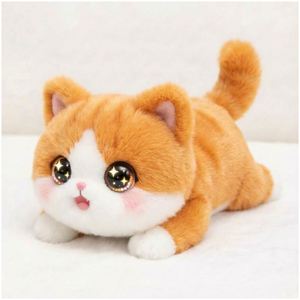
Enterprise Production Lines
Production-Ready AI Concept Generators & Companion Hardware
Direct from our Shenzhen ISO 9001 manufacturing hub: Commercialized generative voice assistants, emotional visual-feedback plush toys, and intelligent companion modules.
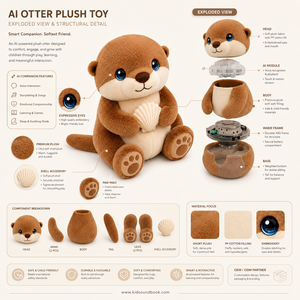

2017
Shenzhen Facility Est.
200+
Global OEM Brands
66
Localized Languages
12-Step
Total Quality Control
25d
Rapid Prototyping
The Paradigm Shift: From Scripted Sound Boxes to Generative AI Concept Toys
The global smart toy ecosystem has officially surpassed the era of hardcoded IC microchips, looping sound boxes, and static optical sensors. Sourcing directors, toy importers, and category executives are navigating a major technological transformation: the rise of the AI Toy Concept Generator. This category encompasses interactive hardware that leverages Natural Language Processing (NLP), Large Language Model (LLM) inference, dynamic thermal generation, and affective computing to synthesize personalized educational and emotional content on the fly.
According to institutional retail data, the smart connected toys category is scaling beyond USD 19.3 billion. However, global brands entering this lucrative space face unprecedented technical friction. An AI toy is fundamentally an interdisciplinary product: it is concurrently a mechanical plush or plastic toy, an advanced piece of radio-frequency consumer electronics, and a continuous cloud-edge software pipeline. Procuring these devices requires an integrated factory that understands both physical compliance (EN71, ASTM F963, mechanical pull tests) and digital governance (COPPA, GDPR-K, encrypted parent-gated telemetry).
Tri-Layer Engineering: How Top Factories Build Viable AI Hardware
Embedded Hardware & Acoustics
Acoustic dampening in cotton fill, dual MEMS microphone arrays with far-field beamforming, high-efficiency DSP noise reduction, and safe thermal dissipating charging modules.
Cloud-Edge LLM Architecture
Tuya-backed low-latency connectivity, generative conversational intelligence, contextual emotional memory retention, and multilingual real-time translation pipelines supporting 66 languages.
Global Compliance & Safety
Non-toxic OEKO-TEX certified fabrics, physical pinch and drop-resistant ABS internal skeletons, UN 38.3 & MSDS battery export documentation, and rigorous COPPA compliance.
Strategic Procurement Trends: The Next 24–36 Months in AI Toys
B2B retail procurement teams are transitioning from opportunistic gadget purchasing to highly curated product lineups. As an OEM/ODM factory partner based in Shenzhen since 2017, we track actionable shifts in buyer requests and supply chain developments:
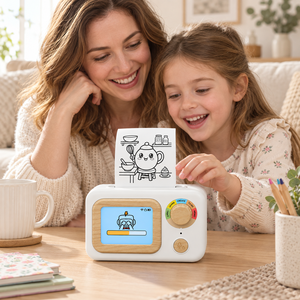
1. Multimodal Interaction Replaces Audio-Only Devices: While simple voice assistant dolls dominated early trial runs, current demand centers on multimodal concept generation. Buyers are sourcing hardware that pairs conversational AI with dynamic visual feedback—such as expressional TFT/LED eye displays, real-time thermal sticker rendering (seen in our voice-to-sticker hardware), and capacitive touch sensors located in pet paws and ears. These multimodal triggers elevate daily user retention and increase toy playtime from 4 minutes to over 28 minutes per session.
2. Edge-Compute Safety & On-Device Prompt Moderation: Regulatory scrutiny across the FTC, European Commission, and UK authorities requires proactive data isolation. The prevailing procurement trend prioritizes hardware with localized prompt firewalls. Our Tuya-based architectures implement multi-stage semantic filtering at both firmware ingestion and cloud processing layers, ensuring violent, mature, or hallucinated AI concepts are suppressed before audible speech synthesis occurs.
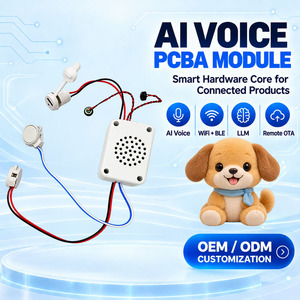
3. Decoupled Modular Integration (The "Smart Core" Strategy): Traditional plush brands with established character designs often avoid re-tooling their entire production line. Sourcing directors are heavily leaning toward pre-certified universal AI modules (WiFi/BLE Generative Dialogue Core Modules). By integrating a compact, pre-certified module into existing plush skins, brands bypass USD 40,000+ in mechanical mold expenditures and reduce time-to-market by 60%.
OEM/ODM Engineering Roadmap: Four Flexible Development Paths
Every commercial program operates under unique unit economics, launch cadences, and software constraints. We provide four distinct engagement models on our proven hardware and Tuya-based AI cloud stack:
| Development Route | System Architecture | Tooling & Mold Scope | Standard Sampling Lead Time | Optimal Buyer Target |
|---|---|---|---|---|
| Route 01: Turnkey Standard | Pre-configured Tuya app stack, mature LLM dialog engine, standard PCBA housing | Zero tooling costs; plush pattern and outer apparel modification only | 25–30 Days (Sample: $350–$400) | Fast retail validation, low-risk seasonal test batches, Amazon brand launches |
| Route 02: Custom Housing | Standard AI firmware with custom expressive eye matrix or articulated face skeleton | Dedicated precision injection tooling for facial mechanics / LED lenses | 40–50 Days (Tooling from $10,000) | Established character IP owners, licensed collectibles, distinct physical visual assets |
| Route 03: Native SDK Bridge | Firmware connects via Tuya OpenAPI / SDK to the client's proprietary enterprise app | Flexible according to client housing or modular core insert | Evaluation based on API endpoint readiness | Companies with pre-existing digital subscription ecosystems, edtech platforms |
| Route 04: White-Label Branded App | Complete app deployment under the buyer's developer account with custom UI branding | Plush skin and optional structural shell development | UI asset finalization + 30 days deployment | Direct-to-consumer premium brands building recurring long-term app engagement |
Enterprise Factory Advantages: Why Global Importers Rely on AIbottoy Hub
Shenzhen AIbottoyhub Technology Co., Ltd. was established in 2017 to eliminate the operational void between consumer electronics fabricators and traditional soft-toy sewing plants. The conventional supply chain often forces an importer to manage an electronic PCBA supplier in Shenzhen, a plush assembly facility in Yangzhou, and a software design team in another time zone. When acoustic reverberations degrade recognition accuracy or batteries fail UN 38.3 transport checks, cross-vendor disputes stall projects indefinitely.
We eliminate this friction by acting as a unified Tier-1 manufacturing center:
Acoustic Shell Engineering
We tune physical fabric weaves, internal sound-damping foams, and microphone sound ports during the initial master pattern stage to guarantee high speech clarity even in loud family settings.
12-Step In-Line Quality Gates
Every batch undergoes AQL 1.0/2.5 protocols, including tensile seam load testing, drop tests, 100% RF pairing verification, lithium-ion battery cycling, and environmental chamber aging.
Turnkey Export Clearances
We assemble and provide full technical compliance files before goods depart the factory floor: CE, RoHS, FCC ID, EN71-1/2/3, ASTM F963, UN 38.3 test summaries, and MSDS safety data sheets.
Buyer Intelligence
Frequently Asked Procurement Questions (FAQ)
Clear, direct technical answers regarding software capabilities, battery shipping protocols, sampling budgets, and enterprise IP protections.
What language configurations are supported out of the box?
English is our factory baseline. Under our Tuya-backed production framework, 66 global languages and localized dialects are configurable via OEM setup. This includes English (US, UK, AU, IN), Spanish (ES, MX), French, German, Italian, Portuguese (PT, BR), Arabic, Japanese, Korean, Russian, Turkish, Hindi, and standard Southeast Asian regional languages.
Can we connect the toys directly to our proprietary private LLM account?
To ensure high production stability, predictable response latency, and low cost for mass retail, our standard models run on the integrated Tuya engine. For enterprise deployments requiring external endpoints or private LLM routing, we provide custom SDK bridge engineering under Route 03, subject to project MOQ and dedicated NRE engineering evaluations.
How are lithium-battery shipping regulations managed for air and ocean freight?
Every battery-powered unit is paired with certified cells containing physical protection circuit modules (PCM). We generate the entire international compliance package—including UN 38.3 test summaries, 1.2m drop test documentation, and current MSDS/SDS sheets—ensuring your freight forwarder clears air and ocean customs without delay.
What are standard sampling lead times and prototype costs?
For existing catalog models with software pairing, sample delivery takes 5–8 days via DHL/FedEx. Fully bespoke physical prototypes (custom fabric skins, tailored boot sounds, customized packaging mockups) require 25–30 days, priced between USD 350 and USD 400. Custom sample fees are credited toward subsequent mass production orders.
How are client intellectual property (IP) and proprietary designs protected?
We execute standard bilateral Non-Disclosure Agreements (NDAs) before reviewing your technical files, CAD drawings, or artwork. Tooling and injection molds paid for by clients remain 100% their proprietary property. We do not re-sell, catalog, or display custom client-tooled products to third parties.
What file formats are required for our custom AI character quote?
Our engineering department works directly with STP, STEP, IGS, STL 3D files for mechanical parts and injection molds. For plush design, packaging, and graphical branding, high-resolution AI, CDR, PDF, and PSD vector assets are accepted.
Ready to Engineer Your Brand's Next AI Toy Success?
Speak directly with our Shenzhen engineering and sourcing team. We review character sketches, evaluate functional specifications, and return an actionable route analysis within 24 to 48 hours.
Get Catalog