Export-Ready AI Smart Hardware & Content Delivery Units
Engineered for Japanese retail channels, cram schools (Juku), and therapeutic companion markets. All models feature Tuya-driven bilingual firmware architectures, modular acoustics, and baby-grade materials.
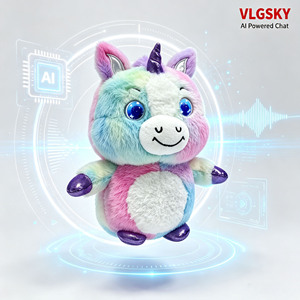
Smart Talking AI Educational Robot Toy Children Interactive Companion Educational Content Voice Function Wi-Fi Enabled App
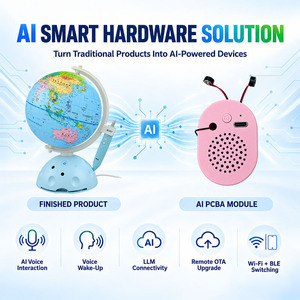
AI Learning Toy Module With WiFi BLE Knowledge Q&A Storytelling Multilingual Voice and Custom Educational Content
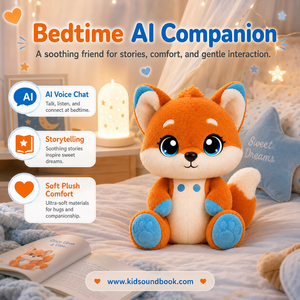
AI Educational Plush Companion Robot Toy for Kids 5-12 Multilingual Voice Chat Emotional Interaction Learning Content Toys
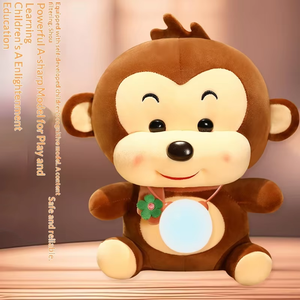
Ai Interactive Metal Toy Robot With Built-in Games Quiz Mode Educational Content For Ages 14 & Up
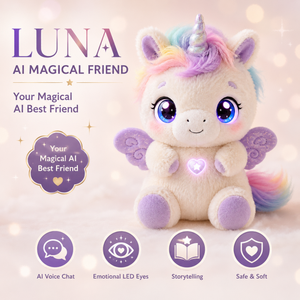
Kids AI Companion Stuffed Plush Toy Offline Voice Interaction Built-in Content Filter Early Education PP Cotton ASTM CPC
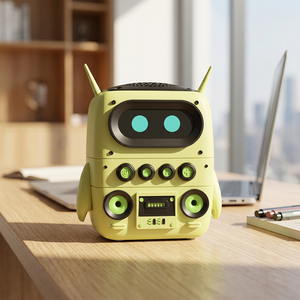
Safe AI Children's Learning Robot | Made of Baby-grade Silicone, Automatically Filters Harmful Content

AI Powered Video Editing Application Development | Intelligent Video Creation Tools for Marketing Content and Media Production
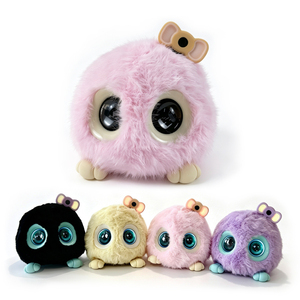
AI Smart Plush Desk Buddy with Camera ChatGPT AI Assistant Dual Screen Voice Interaction Emotional Recognition Companion Toy
Executive Sourcing Brief: Navigating Japan's Intelligent Toy Market
The Japanese toy and juvenile entertainment landscape represents one of the most commercially nuanced and quality-exacting ecosystems globally. Valued at over 950 billion JPY, the sector is experiencing a monumental transformation driven by two converging phenomena: the national GIGA School Initiative and the demographic reality of Shoushikoureika (aging population combined with a declining birthrate). The resulting market effect is characterized by the "Six Pockets" phenomenon—where parents, grandparents, and maternal/paternal relatives concentrate higher discretionary budgets on a single child, demanding educational toys embedded with sophisticated content creation, safety safeguards, and emotional intelligence.
For Japanese trading firms (Sogo Shosha), character intellectual property (IP) syndicates, and educational publishers (such as those serving the Juku and Gakken-tier ecosystems), standard electronic sound toys no longer deliver market differentiation. Sourcing teams increasingly seek AI toy content creation factories and exporters capable of unifying three decoupled supply chains: precision electromechanical manufacturing (Monozukuri-level plastics and seam tolerances), localized natural language processing (specifically addressing the semantic cadence of Japanese Keigo honorifics, sentence-ending particles, and onomatopoeia), and strict regulatory compliance involving MIC Technical Regulations Conformity Certification (TELEC/Giteki), PSE mark electrical testing, and the Japan Toy Association's ST (Safety Toy) standard.
Localized AI Toy Application Scenarios Across Japan
How leading Japanese commercial buyers deploy our Shenzhen-manufactured OEM/ODM platforms across domestic retail, edtech, and elderly welfare sectors.
Juku & Eikaiwa English Edutainment
In preparation for Junior High School entrance exams (Chugaku Juken) and mandatory early elementary English curricula, cram schools employ our AI plush companions. Hardware modules feature dual Japanese-English LLM prompt engines, enabling natural bilingual roleplay, phonics correction, and anxiety-free conversation practice without native teacher shortages.
Iyashikei (Emotional Healing) & Silver Welfare
Targeted at single urban dwellers in Tokyo and Osaka experiencing loneliness, as well as retirement facilities addressing dementia support. Our AI plush desk buddies integrate emotional eye displays, gentle biometric feedback, and conversational memory, delivering therapeutic touch and cognitive stimulation compliant with Japanese eldercare guidelines.
Anime & Manga Character IP Hardware Extensions
Major publishing syndicates and toy licensing enterprises convert static vinyl models and blind-box collectibles into intelligent conversational agents. By injecting customized voice actor (Seiyuu) datasets and persona constraints via Tuya-based neural cloud routing, standard figures become interactive shelf companions.
Japanese Import Specifications: Comparative Analysis
Direct comparisons between general international toy specifications and the mission-critical requirements enforced by Japanese customs and retail chains.
| Regulatory / Technical Pillar | Standard Western Baseline | Mandatory Japan Market Requirement | Factory Compliance Implementation |
|---|---|---|---|
| RF & Telecommunication | FCC Part 15 (USA) / CE-RED (Europe) | TELEC / Giteki Mark (Radio Act Certification) | Factory Pre-Certified Integrated modules with Technical Regulations Conformity stamp on chassis/labeling. |
| Mechanical & Toy Safety | ASTM F963 / EN71 Parts 1-3 | ST Mark (ST-2016 Standards) enforced by JTA | Lab Verified Seam pull testing exceeds 70N; food hygiene inspection for mouth-contact plastics. |
| Battery & Electrical Safety | UL 1642 / UN 38.3 Shipping Standard | PSE Mark (Denan Law) + METI Notification | Turnkey Pack Circular PSE certified cells, integrated thermal protection circuits, full UN 38.3 test dossier. |
| Natural Language Processing | Generic English LLM APIs | High-Context Japanese NLU (Keigo, Aizuchi, Dialect) | Tuya Optimized Tailored Tokyo node routing, latency under 850ms, context-aware politeness filters. |
| Data Privacy & Children | COPPA (USA) / GDPR-K (EU) | APPI Compliance (Act on Protection of Personal Info) | Zero Voice Storage Edge-filtered voice packets, non-traceable session identifiers, parental opt-in models. |
Technical Scope & Development Pathways for Japanese Importers
Launching smart hardware into Japanese department stores (such as Takashimaya, Yodobashi Camera, or Toys "R" Us Japan) requires absolute clarity regarding engineering boundaries. To prevent costly timeline overruns, our Shenzhen factory operates on four proven Tuya-based technical tiers:
Route 1: Turnkey Proven App + Customized Japanese Plush Shell
The most cost-effective path for lifestyle and giftware distributors. You leverage our mature, field-tested companion app with pre-built Japanese localization, while our master pattern makers craft bespoke plush exteriors, embroidery, and Japanese packaging. Sampling completes in 25–30 days with minimal mold investment (USD 350–400 typical sample fee).
Route 2: Same App + Custom Face Mold / Dynamic LED Matrix
Designed for iconic character IPs requiring expressive non-verbal feedback. We engineer proprietary injection molds for articulated silicone faces, dual OLED emotive screens, or animated LED arrays, preserving the ultra-reliable Tuya communication backbone. Mold tooling spans 40–50 days with precision steel tooling starting from USD 10,000.
Route 3: Tuya SDK Integration into Client's Proprietary Japanese Platform
Tailored for established Japanese gaming or educational brands operating custom iOS/Android apps. We deliver certified hardware modules coupled with Tuya OpenAPI and SDK bindings, enabling your Tokyo software engineering team to govern UI, analytics, and telemetry while outsourcing hardware liability to us.
Route 4: Dedicated Whitelabel Application Architecture
For brands demanding an independent presence on the Apple App Store Japan and Google Play Japan under their own corporate developer account. We deploy a customized build of the Smart Life framework with Japanese corporate branding, customized EULA documentation, and APPI-compliant account handling starting from USD 14,000.
Shenzhen Speed Meets Japanese Precision Quality Control
Operating out of Shenzhen’s Guangming High-Tech District since 2017, we bridge the hardware speed of the Greater Bay Area with the zero-defect culture expected in Japan.
End-to-End Compliance Governance
We provide full technical documentation for Japanese customs entry: UN 38.3 test summaries, Material Safety Data Sheets (MSDS), PSE diamond/circle certificates, and TELEC construction conformity certificates directly from accredited laboratories.
12-Step Japan-Grade QA Process
Every production batch undergoes incoming fabric needle detection, drop testing from 1.5 meters, continuous 72-hour burn-in testing for electronic modules, and AQL 0.65/1.0 optical inspection for stitching, embroidery, and parting line seams.
Rigorous IP Protection Protocols
Having served over 200 global brand projects, our factory enforces strict non-disclosure covenants (NDA), segregated clean-room assembly lines for proprietary IP figures, and secure destruction of defective character scrap to prevent market leakage.
Integrated Acoustic Architecture
Unlike standard plush factories that outsource electronics, we co-engineer plush stuffing density with MEMS microphone cavities and dynamic speaker baffles, ensuring Japanese speech recognition accuracy exceeds 96% even in noisy domestic settings.
Agile Sampling & Automated Production
Our in-house 3D printing, laser pattern cutting, and automated SMT placement enable physical working prototypes delivered to Tokyo within 25–30 days. Standard mass production runs complete in 15–20 days following sample sign-off.
Direct Exporter Logistics Coordination
From DDP shipping to Yokohama or Kobe port to air-express consolidation for launch events, we handle export declarations, dangerous goods packaging protocols for lithium cells, and complete paperwork required by Japanese customs brokers.
Essential Inquiries from Japanese Sourcing Specialists
Direct answers addressing the legal, linguistic, and operational realities of importing AI smart toys from our Shenzhen facilities into Japan.
Q1 How does the factory manage TELEC (Giteki) certification under Japan's Radio Act?
All our wireless AI modules (Wi-Fi 2.4GHz and BLE 5.0/5.2) utilize chipsets that hold preexisting MIC technical regulations conformity certification. If your project incorporates a custom PCB antenna or bespoke metal housing altering radiation patterns, we coordinate direct certification through registered testing bodies (such as TELEC or accredited overseas partner labs) with full test documentation supplied prior to mass production.
Q2 What lithium battery documentation is prepared for Japanese Customs and METI notification?
Our battery packs include circular PSE testing reports (for lithium-ion cells with energy density exceeding 400 Wh/L), UN 38.3 lithium battery transportation test summaries, complete 1.2-meter drop test reports, and compliant bilingual Safety Data Sheets (SDS). We assist Japanese importers in preparing paperwork for submission to the Ministry of Economy, Trade and Industry (METI).
Q3 Can the AI engine understand Japanese natural conversational nuances and honorifics (Keigo)?
Yes. By utilizing Tuya's multimodal neural system optimized for East Asian languages, our firmware routes requests through Japanese ASR and TTS models. The system accurately interprets conversational nuances, including polite forms (Teineigo), respectful expressions (Sonkeigo), sentence-ending particles (ne, sa, yo), and common regional intonations, maintaining latency under 850ms via Tokyo cloud endpoints.
Q4 How does the toy handle content safety in accordance with Japan's APPI regulations?
Data privacy is critical for Japanese schools and parents. Our devices process conversational audio through volatile memory buffers without permanent cloud storage of children's voice recordings. Data packets transmitted to cloud models are anonymized using tokenized identifiers, strictly adhering to Japan's Act on the Protection of Personal Information (APPI) and international COPPA guidelines.
Q5 Can we record and integrate proprietary Japanese voice actor (Seiyuu) audio files?
Yes. For Route 1 and Route 2 OEM developments, we can flash proprietary Japanese system prompt sounds, character greeting bites, wake-up calls, and emotional sound effects directly into the on-board SPI flash memory (supporting 16MB to 128MB). For dynamic generative conversation, we can configure TTS voice models to match your character's desired pitch and timbre.
Q6 What are the Minimum Order Quantities (MOQ) and production lead times?
For custom plush shells built upon our pre-certified Tuya electronic core (Route 1), our standard production MOQ is 1,000 units per character variant. Fully bespoke plastic tooling or specialized LED expression molds (Route 2) typically require 2,000 to 3,000 units to amortize engineering tooling. Repeat mass production runs ship within 15–20 days following formal inspection sign-off.
Q7 How does the factory manage confidential character assets and NDA agreements?
We routinely manufacture licensed merchandise and intellectual property for global brands. Prior to receiving 3D CAD data, character character turnarounds, or sound libraries, we execute legally binding Non-Disclosure Agreements (NDAs). Tooling molds are watermarked, securely vaulted, and never exhibited or repurposed for other clients or domestic Chinese commerce.
Q8 What testing standards are conducted to satisfy Japan's ST (Safety Toy) Mark?
Our toys undergo testing aligned with ST-2016 Part 1 (Mechanical and Physical Properties - preventing small-part detachment and choking hazards), Part 2 (Flammability testing of plush fabrics), and Part 3 (Chemical properties, including heavy metal migrations, phthalate plasticizers, and formaldehyde limits). All tests are conducted via third-party laboratories such as SGS, TÜV, or STC.
Initiate Your AI Toy Development Program for Japan
Consult directly with our Shenzhen engineering and export team. Send your character design sketches, target functions, or procurement brief, and receive a comprehensive technical route evaluation within 24 hours.