STEM & Accompanying
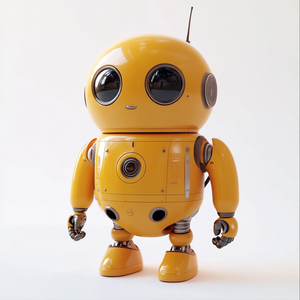
OEM Customized Functional Toy AI Robot Answer Question Accompanying Learning AI Toy
- Dual-core voice DSP processing
- Multi-turn dialogue curriculum
- Safe eco-ABS exterior molding
Engineered to satisfy KC Safety Directives, Korean Natural Language Processing (NLP) integration, and the viral social dynamics of KakaoTalk, Instagram, and Coupang.
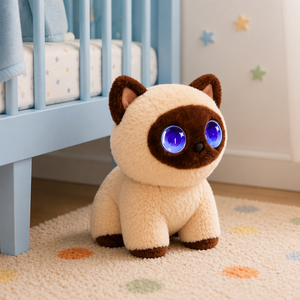
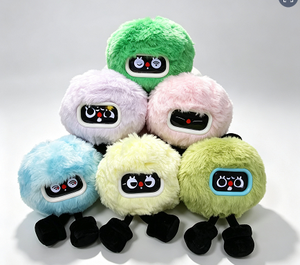
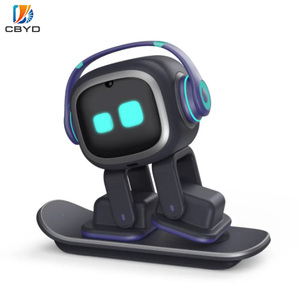
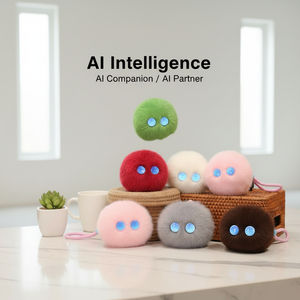
The Seoul Metropolitan Area represents one of the most technologically saturated, consumer-sophisticated, and brand-discerning smart hardware markets in the world. Sourcing AI-powered interactive toys for South Korea requires far more than repackaging standard electronic novelty items; it mandates an architectural understanding of South Korea's unique cultural paradigms, strict regulatory standards, and hyper-connected social commerce mechanics.
Three primary cultural-economic forces are accelerating the demand for AI interactive toys within Seoul:
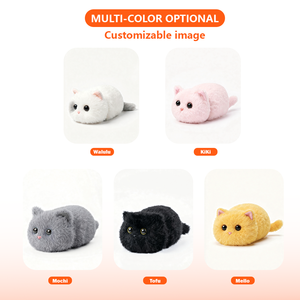
Adult consumers in Seongsu-dong, Hongdae, and Gangnam are purchasing collectible, expressive AI desk robots and emotional plush companions as stress relief, decorative aesthetics, and digital pets.
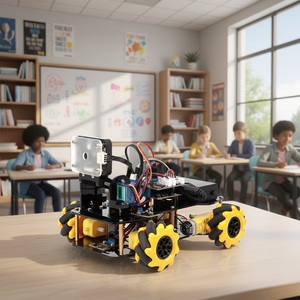
Seoul parents invest aggressively in early English and coding education. AI conversational companions capable of natural bilingual English-Korean roleplay and Python robotic kits address direct tutoring needs.
With over 38% of Seoul residences classified as single-person households, intelligent pet substitutes that talk, express dynamic screen emotions, and integrate with smart home hubs reduce urban loneliness.
Korean buyers migrate quickly between organic social virality and rapid commerce fulfillment. When launching an AI toy brand in Seoul, the engineering and packaging design must facilitate unboxing experiences suitable for Naver Shopping Live, Coupang Rocket Delivery standards, and viral crowd-funding campaigns on Wadiz.
To maximize retail penetration and institutional procurement, OEM/ODM buyers in Seoul segment their inventory according to highly specialized application scenarios across the capital's distinct districts:
| Target Scenario | Primary Seoul Locations | Target User Demographics | Hardware & AI Feature Requirements |
|---|---|---|---|
| Hagwon & EdTech Prep | Daechi-dong (Gangnam), Mok-dong, Junggye-dong | Ages 4–12; ambitious parents, private academies | ESL bilingual speech engine, speech clarity algorithms, ESP32 coding modules, zero-hallucination guardrails. |
| Kidult & Desk Aesthetic | Hongdae, Yeonnam-dong, Seongsu-dong | Ages 20–35 young professionals, tech creatives | OLED animated eye expressions, mechanical pan-tilt motors, Tuya Smart Life smart-home synchronization, desktop self-docking. |
| Silver Care & Companionship | Nowon-gu, Gangbuk-gu, Eunpyeong-gu | Elderly living alone, municipal welfare programs | Medication voice reminders, high-sensitivity microphone arrays for faint voices, emergency SOS alerts, non-allergenic hygienic plush. |
| Pop-Up Brand Activations | The Hyundai Seoul (Yeouido), Starfield COEX | Gen-Z trend-seekers, IP collectors | Custom injection-molded PVC faces, fast app pairing via QR code, NFC dynamic content unlock, Wadiz crowdfunding appeal. |
Exporting smart hardware into South Korea requires uncompromising adherence to telecommunication standards, material safety laws, and acoustic engineering. As an experienced Shenzhen manufacturing partner, we remove the technical friction of cross-border consumer hardware.
One of the most frequent points of failure in AI plush development is acoustic attenuation caused by plush fiber thickness, foam density, and speaker cavity resonance. If voice prompts are muffled or microphones fail to distinguish between ambient Seoul subway noise and a child's prompt, user retention drops immediately.
Our Shenzhen engineering laboratory calibrates dual-microphone arrays with customized acoustic baffles and beamforming software, guaranteeing that wake-word detection rates remain above 94% even through 5mm high-density plush fabric.
Through our mature Tuya-based AI system, our smart toy electronics tap into multi-language cloud engines supporting 66 languages. For the Korean market, the device firmware is configured for low-latency Korean voice recognition, handling local honorifics (존댓말), playful speech idioms, and bilingual conversational switching without costly custom server development.
Entering the South Korean market requires rigorous legal conformity. We support Seoul buyers with end-to-end documentation across three mandatory tiers:
Building an AI companion device from the ground up requires massive capital and extended timelines. We offer Seoul importers and brand owners four pragmatic development paths that reuse proven hardware architectures while keeping your brand front and center:
| Development Route | Hardware Architecture | Ideal For | Sampling Time | Tooling / Service Investment |
|---|---|---|---|---|
| Option 01: Turnkey Rapid Deployment | Existing Tuya-powered internal modules, stock plush or plastic shell with custom branding, label, and packaging. | Coupang / Naver store sellers needing the fastest time-to-market with proven QA. | 25–30 Days | Sample: $350–$400 USD |
| Option 02: Custom Face & LED Eye Mold | Standard Tuya AI motherboard + bespoke injection molded face, LED/OLED matrix screen, custom character plush. | Brands with established IP, Wadiz crowdfunders, designer character toy studios. | 40–50 Days (tooling incl.) | Tooling from $10,000 USD |
| Option 03: Tuya SDK to Your Existing App | Standard AI toy PCBA and acoustic chassis connected via Tuya SDK to the buyer’s proprietary mobile app. | Established EdTech institutions and gaming publishers with their own app ecosystems. | Determined by App Readiness | Service Fee: $12,000 USD |
| Option 04: Fully Branded Independent App | Customized hardware integrated with an independent white-labeled app published under your own Korean App Store/Google Play account. | Venture-backed startups and premium toy brands demanding total corporate identity ownership. | Subject to UI Scope | Service Fee from $14,000 USD |
Operating out of Guangming District, Shenzhen since 2017, Shenzhen AIbottoyhub Technology Co., Ltd. serves as an end-to-end engineering and production partner for over 200 global toy brands. Combining electronic engineering, plush fabrication, and acoustic tuning under one factory roof eliminates cross-supplier blame and supply chain delay.
We do not outsource electronic engineering. PCBA layout, firmware flashing, plastic mold design, and sewing are handled under unified ISO 9001 supervision.
From CAD / AI vector files to fully functioning prototypes with interactive sound and app pairing within 25–30 days. Fast iteration protects your retail launch date.
Full UN 38.3, MSDS, and battery transport paperwork provided. Fast air freight direct to Incheon International Airport or LCL/FCL ocean freight to Busan port.
Quality control for AI toys involves testing plush seams, internal electrical harnesses, battery safety, and wireless stability simultaneously. Every production batch undergoes our 12-step inspection framework before dispatch:
| Stage | Inspection Checkpoints | Inspection Standards & Equipment |
|---|---|---|
| 1. Incoming QC (IQC) | Fabric safety, non-toxic stuffing, ABS resin purity, PCBA electrical testing, grade-A lithium-ion battery cells. | RoHS spectrometers, fabric needle detectors, battery cycle life test fixtures. |
| 2. In-Process (IPQC) | Internal harness soldering, seam tension strength, pull-force on eyes and accessories, sound chamber damping. | Tension meters (>70N pull test), digital torque testers, mic/speaker acoustic isolation boxes. |
| 3. Electronic & AI QA | Wi-Fi / BLE pairing stability, voice response latency, screen refresh rate, power draw on standby mode. | Automated RF test boxes, continuous loop power consumption monitors. |
| 4. Final Outgoing (OQC) | Korean packaging verification, barcode readability, drop testing, carton stacking endurance, AQL 1.0–2.5. | Drop test machines, vibration simulation tables, optical barcode scanners. |
Essential guidance covering technical integration, regulatory compliance, logistics, and production timelines for buyers in Seoul.
Yes. Our underlying Tuya cloud engine supports 66 languages, including native Korean. It accurately recognizes colloquial child phrases, daily honorific speech (존댓말), and basic English-Korean bilingual code-switching with an average response latency under 1.5 seconds.
We supply complete Bill of Materials (BOM), schematic circuit diagrams, PCB layout drawings, component safety data sheets, and pre-testing reports (RoHS, EN71, IEC 62115). Your designated Korean testing laboratory (such as KCL, KATRI, or KTC) can execute the official KC registration without delay.
All our battery cells are UN 38.3 certified and tested for drop, altitude simulation, thermal shock, and vibration resistance. We supply full Dangerous Goods (DG) declarations, MSDS/SDS sheets, and proper Section II packaging for direct air shipping into Incheon (ICN) or ocean containers into Busan.
For custom OEM orders utilizing existing hardware frameworks, standard MOQ is 1,000 units with mass production lead times of 15–20 days following sample sign-off. Projects requiring bespoke plastic injection molds (e.g., custom character heads) require approximately 40–50 days for mold development and sampling.
Yes. We regularly execute bilingual NDAs with Korean buyers prior to receiving character sketches, 3D CAD files, or brand assets. Your molds remain strictly proprietary and are never offered to other international or domestic distributors.
Yes. We provide complete die-lines for retail color boxes, user manuals, quick-start guides, and warranty cards. Our factory prints packaging in full color with Korean regulatory warning labels (such as KC mark sizing and age grading icons) directly from your artwork files.
Whether you are preparing a Wadiz crowdfunding campaign, restocking Coupang Rocket inventory, or supplying an educational academy network in Gangnam, our streamlined procurement process eliminates common export hurdles:
Share character concept, target age, planned features, and target retail price. We assess technical feasibility within 24 hours.
Choose between standard platform deployment or custom mold development based on budget and market launch schedule.
Complete working physical prototype fabricated with active speech firmware, audio tuning, and app connectivity in 25–30 days.
Complete documentation packages supplied for KC Safety, EMC testing, and Korean PIPA data compliance review.
Automated SMT PCB assembly, precision plastic molding, hygienic plush sewing, and 12-step QC completed in 15–20 days.
Custom packaging labeled for Korean customs, palette-wrapped, and dispatched directly to Incheon or Busan ports.