Flagship AI 3D Printing Toys & Intelligent Fabrication Units
Direct OEM/ODM catalog products engineered for immediate cross-border compliance, high-resolution child-safe 3D extrusion, and intelligent cloud-integrated STEM interactivity.
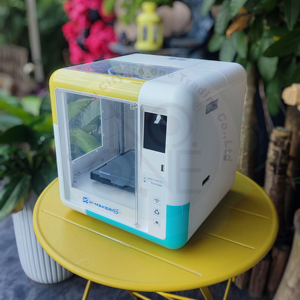
New Premium NOONE X-MAKER Ai AI 3D Printer Smart Educational Toy Handmade Gift Boys Girls High-End Birthday Present USB/WiFi
- Form Factor: Enclosed Safety Chamber
- Connectivity: Wi-Fi / USB / Cloud App
- Leveling: Automated AI Calibration
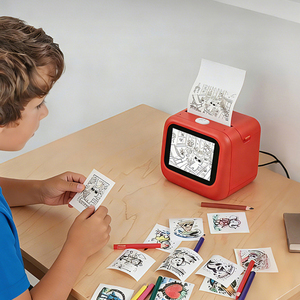
OEM AI Toy ODM AI Printer Custom AI Toy Private Label AI Hardware Factory Educational Toy Supplier Smart Creative Device Kids
- Tooling: Custom Mold & Tooling
- Software: Tuya AI & Smart Life Framework
- Certifications: FCC, CE, ASTM F963
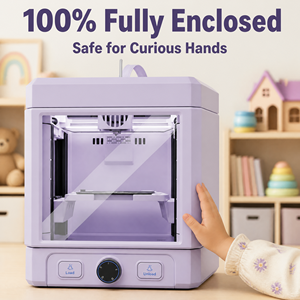
Mixware WandGo Consumer-Grade 3D Printer AI for Kids-Colorful Enclosed FDM 1.75mm PLA Filament STEM Education Guangdong Private
- Filament: 1.75mm Bio-Degradable PLA
- Build Volume: Child-Optimized Desktop
- Safety Door: Auto-Pause Sensor Relay
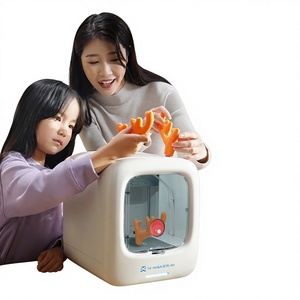
AI Smart Automatic Plastic 3D Printer Pen SD-1 Handmade Toy for Children Aged 8 and Above Birthday Gift
- Temp Range: Low-Temp Ceramic Nozzle
- Power: USB Type-C Safe Voltage
- Feed System: Intelligent Auto-Retract
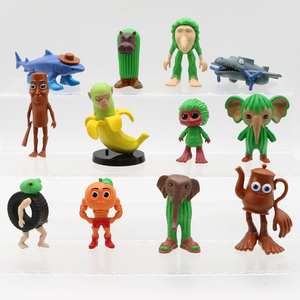
TungTungTung 12PCS 3D Printing Statue Decoration Fidget Creative AI Toy Figure Ornament Crafts Collection Children Gift
- Structure: Articulated Multi-Joint Print
- Material: High-Gloss Silk PLA Composite
- Retail Format: Blind Box / Collector Display
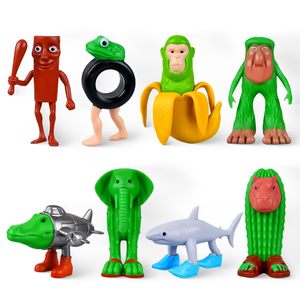
EPT TungTungTung Sahur Tralalelo Tralala 3D Printing Statue Decoration Fidget Creative AI Toy Tralalero Tralala Action Figures
- Engineering: Print-in-Place Kinetic Hinges
- Safety: Heavy-Metal Free Pigments
- Packaging: Retail Hang-Tag & Blister
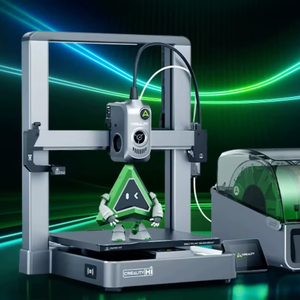
Hi New 3D Toy Printer AI Camera Automatic Leveling High Resolution PLA Construction Architectural Model Small Desktop 1 Year USB
- Optical System: Embedded AI Camera Sensor
- Defect Detection: Spaghetti Failure Auto-Stop
- Bed Calibration: Zero-Touch Real-Time Mesh
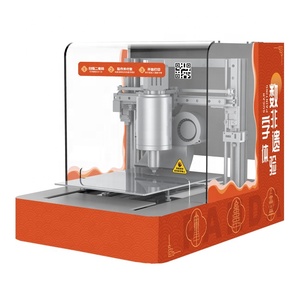
Funny and Profitable AI Sugar Painting 3D Printing Robot Attractive Kids and Teenagers Suitable in Supermarket
- Media Extrusion: Food-Grade Sugar Solution
- UI: Touchscreen AI Vector Generator
- Commercial: Coin/Card Kiosk Integration
Top 10 AI 3D Printing Toy Manufacturers Serving the Seattle Market
A rigorous comparative assessment of industrial capacities, AI architecture integration, international certifications, and trans-Pacific logistics speed into King County.
| Rank & Manufacturer | HQ & Facilities | Primary Technology Focus | AI & Firmware Core | Compliance Certifications | Seattle Transit Days |
|---|---|---|---|---|---|
| #1 Shenzhen AIbottoyhub Technology Co., Ltd. | Shenzhen, Guangdong | OEM/ODM Smart 3D Printers, AI Plush & Robotics | Tuya AI Engine (66 Lang) | ISO 9001, ASTM F963, CPSC, UN 38.3 | 12–16 Days (Port of Seattle) |
| #2 Mixware Robotics Precision Corp. | Dongguan / Shenzhen | Enclosed Desktop FDM Miniatures for Kids | Proprietary Embedded Linux / Klipper | EN71, FCC Part 15B, RoHS, CE | 14–18 Days (Port of Seattle) |
| #3 NOONE Maker Tech Ltd. | Shenzhen Tech Park | Automated Calibration Educational Printers | AI Vision Spool Monitoring & Mesh Bed | ASTM F963-23, CPSIA, ICES-003 | 14–17 Days (Sea-Tac Express) |
| #4 Suke Auto Toy Robotics Div. | Shenzhen, China | Articulated 3D Statues & Blind-Box Figures | Integrated NFC / AI Audio Companion | ICTI Ethical Toy, REACH, Prop 65 | 12–15 Days (Tacoma Terminal) |
| #5 WandGo STEM Intelligent Tools | Huizhou, Guangdong | Child-Safe Ceramic Nozzle 3D Printing Pens | Smart Temperature Relay & Auto-Feed | UL 62368-1, FCC, California Prop 65 | 14–18 Days (Port of Seattle) |
| #6 K-Maker Creative Cloud Hardware | Guangzhou Industrial Zone | Desktop Architectural Model Mini Printers | Cloud Slicing & Text-to-3D AI Modeling | ASTM F963, CE, ISO 14001 | 15–20 Days (NWSA Terminal) |
| #7 SugarPrint Food-Tech Systems | Wuhan & Shenzhen | Interactive AI Culinary Vector 3D Robots | Multi-Axis Vector AI Drawing Generator | FDA Food Contact, NSF, CE Electrical | 16–22 Days (Port of Seattle) |
| #8 Pacific Rim Toy Dynamics Ltd. | Hong Kong / Shenzhen | Private Label STEM Electronics & Toys | Tuya IoT SDK / App-Controlled Modules | EN62115, ASTM F963, CPSC | 12–16 Days (Port of Seattle) |
| #9 ToyFab Kinetic Figure Labs | Dongguan Craft Hub | Print-in-Place Fidget Statues & Keychains | Generative Mesh Infill & Joint Tolerance | CPSIA Heavy Metals, ASTM F963 | 14–18 Days (Tacoma Port) |
| #10 NovaBot Smart Education Ltd. | Shenzhen Nanshan | Integrated Camera Slicing AI Desktop 3D Units | Neural Network Defect Detection | FCC, UL, RoHS, WEEE, CPSC | 13–17 Days (Sea-Tac DDP) |
Localized Application Scenarios Across the Seattle Metropolitan Corridor
Targeted distribution channels, experiential commercial spaces, and educational ecosystems driving explosive demand for intelligent 3D additive toys throughout Puget Sound.
K-12 STEM Classrooms & Maker Spaces
Public and independent school systems—including Seattle Public Schools (SPS), Bellevue School District, and Lake Washington School District—actively adopt fully enclosed, automated AI 3D printers. The zero-touch auto-leveling and non-toxic bio-PLA extrusion fit classroom safety standards, allowing students to convert voice-prompted digital concepts into physical artifacts in under an hour.
Tech-Corridor Family Enthusiasts
The dense concentration of tech corporate professionals in Redmond, Bellevue, South Lake Union, and Kirkland has fostered early-adopter parenting habits. Parents seek screen-positive, intellectually enriching smart toys that teach spatial geometry, CAD modeling logic, and AI prompt engineering without cumbersome calibration hurdles or mechanical failure risks.
Boutique Retail & Pike Place Pop-Ups
Independent toy curators, Pacific Science Center gift shops, and artisanal kiosks across downtown Seattle and Bellevue Square deploy kinetic, articulated 3D printing fidget figures and live AI sugar-painting 3D robots. These devices act as high-margin foot-traffic magnets, blending modern automated additive manufacturing with immediate retail novelty.
Macro Trends Shaping Pacific Northwest Toy & Hardware Procurement
Critical structural shifts governing consumer preferences, environmental stringency, and cloud software privacy across Washington State.
Voice-to-Print AI Pipeline
The migration from manual slicing software (G-code) toward intuitive natural language processing. Children describe a toy (e.g., "a rocket-powered sea turtle"), and edge-cloud AI automatically generates watertight 3D models with validated support structures optimized for fast printing.
Strict Washington CSPA Ecology
Seattle buyers enforce uncompromising environmental and chemical scrutiny. Toy filaments must comply with Washington State Children's Safe Products Act (CSPA - RCW 70A.430), requiring zero phthalates, lead, cadmium, or BPA, with a heavy commercial preference for compostable PLA and PHA polymers.
COPPA & Edge-Computing Privacy
With cloud connectivity comes parental apprehension over personal data harvesting. Pacific Northwest school boards and tech-literate consumers mandate rigorous adherence to the Children's Online Privacy Protection Act (COPPA), favoring local firmware processing and encrypted Tuya cloud channels.
Direct Shenzhen-NWSA Logistics
Mitigating inventory carrying costs via streamlined Pacific shipping lanes. Importers prioritize Shenzhen factories capable of executing DDP shipments into the Northwest Seaport Alliance (NWSA - Seattle & Tacoma terminals), shaving 7–10 transit days off Southern California routes.
Engineering the Modern AI 3D Toy: Materials, Safety Protocols, and Cloud Frameworks
The convergence of additive manufacturing hardware with consumer-grade artificial intelligence represents one of the fastest-growing categories within global smart toys. For enterprise sourcing directors, wholesale toy distributors, and institutional procurement teams across the Pacific Northwest, understanding the intersection of mechanical design, mechatronics, safety engineering, and compliance certifications is essential to building an enduring private-label brand.
1. Hardware Architecture and Safety Mitigations in Educational FDM Units
Traditional hobbyist 3D printers present numerous physical and operational hazards that render them unsuitable for unsupervised juvenile operation: hotend nozzle temperatures exceeding 200°C, open-frame belt pinches, volatile organic compound (VOC) micro-emissions from unvented filaments, and complex manual bed leveling. To bridge the gap into the consumer toy market, our Shenzhen engineering facility implements four fundamental hardware innovations:
- Enclosed Intelligent Chassis Design: Fully encapsulated print chambers with magnetic door switches that trigger an immediate hardware-level pause the millisecond a child opens the enclosure during an active print cycle.
- Rapid-Cool Low-Temperature Hotends: Proprietary heat-block dissipation geometries that maintain precise thermal stability during extrusion while shielding children from contact burns through heat-insulated ceramic shells.
- Optoelectronic Automatic Mesh Bed Leveling: High-precision non-contact induction sensors that map the build surface at 16 discrete points before each print job, completely eliminating failed prints caused by misaligned Z-axis tolerances.
- Active Carbon and HEPA Air Filtration: Integrated centrifugal fans passing chamber air through multi-stage filters to ensure zero particulate emissions enter classroom or bedroom environments.
Procurement Tip for King County Educational Supply Chains:
Always mandate that your OEM factory supplies verified UL 62368-1 electrical power supply documentation alongside ASTM F963 mechanical test reports. Uncertified internal power transformers remain the number one cause of customs detention at the Port of Seattle.
2. AI Software Ecosystem: Tuya Cloud, Dynamic Infill, and Natural Language Interactivity
Software is the core differentiator separating legacy 3D printers from next-generation AI 3D printing toys. Through our mature Tuya IoT partnership, our devices integrate an end-to-end framework capable of processing voice commands across 66 native languages. When a young creator interacts with the companion mobile or tablet application, our cloud infrastructure handles the complex parametric modeling computations, removing the steep learning curve traditionally associated with CAD and slicing software.
Furthermore, internal computer vision systems (embedded AI camera modules) continuously monitor the print layer progression. Using lightweight neural network defect detection algorithms, the printer detects extrusion spaghetti, layer shifts, or bed detachment in real time, automatically halting the feed mechanism to prevent filament waste and fire hazards. This automated closed-loop intelligence provides institutional buyers with the peace of mind required for unsupervised school and library installations.
3. Material Chemistry & Washington State Chemical Regulations
Washington State enforces some of the strictest chemical compliance standards in North America under the Children's Safe Products Act (CSPA - Chapter 70A.430 RCW). Toy filaments imported through regional ports must be rigorously analyzed by accredited third-party laboratories (such as SGS, Intertek, or TÜV Rheinland) for heavy metals, restricted phthalate esters (BBP, DBP, DEHP, DIBP, DPENP, DHEXP, DCHP), and short-chain chlorinated paraffins (SCCPs). Our factory guarantees 100% pure food-grade polylactic acid (PLA) sourced from non-GMO cornstarch derivatives, ensuring full bio-degradability and absolute compliance with both Washington state and U.S. Federal consumer product safety statutes.
Why Tier-1 Importers Partner with AIbottoy Hub (Shenzhen)
Combining the world's most agile electronics manufacturing supply chain with dedicated Western compliance engineering and transparent OEM/ODM processes since 2017.
One Factory Team: Toy + Tech + AI
An AI toy is simultaneously a toy, consumer electronics, and a software content service. AIbottoy Hub engineers all three layers in-house, eliminating the finger-pointing that occurs when plush factories subcontract electronics and software to third parties.
Mature Tuya IoT AI Architecture
Avoid millions in failed software R&D. Launch on our proven Tuya-based OEM/ODM framework supporting 66 languages, rapid Wi-Fi/BLE provisioning, and turnkey iOS/Android companion app deployment with high daily user retention mechanics.
12-Step Quality Inspection Workflow
From raw fabric and plastic resin spectrometry to PCBA in-circuit testing, acoustic calibration, safety drop tests, and strict AQL 1.0–2.5 final audits, our ISO 9001 certified manufacturing ensures defect rates remain below 0.15% across bulk orders.
Rapid Tooling & Express Sampling
Move from concept sketches to functional prototypes in 25–30 days. For projects requiring custom face molds, LED screens, or unique structural shells, our precision CNC and tooling facilities deliver complete production molds in 40–50 days.
Turnkey Export & Battery Documentation
Lithium-ion battery shipping regulations are strictly enforced by U.S. DOT and IATA. We provide complete UN 38.3 test summaries, MSDS/SDS dossiers, and sea/air packaging certifications with every shipment to ensure effortless U.S. Customs clearance.
Uncompromising IP & NDA Protection
We respect design ownership. We execute binding NDAs prior to reviewing client CAD drawings or design briefs, guaranteeing that proprietary molds, packaging artwork, and firmware builds remain 100% exclusive to your brand.
Frequently Asked Questions by Pacific Northwest Buyers
Direct operational answers addressing trans-Pacific shipping, local safety compliance, software privacy, and OEM minimum order thresholds.
For maritime ocean freight, cargo departs Shenzhen (Yantian or Shekou ports) directly across the Pacific into the Northwest Seaport Alliance (NWSA) terminals at the Port of Seattle or Port of Tacoma. Ocean transit typically takes 12 to 16 days—significantly faster than transit into Long Beach or New York. For time-sensitive retail launches or sample runs, express air cargo via Seattle-Tacoma International Airport (SEA) delivers door-to-door in 5 to 8 business days with complete customs clearance handled under DDP terms.
Every production run destined for the United States undergoes certified third-party testing according to ASTM F963-23 (Standard Consumer Safety Specification for Toy Safety), CPSIA (Consumer Product Safety Improvement Act), and the Washington State Children's Safe Products Act (CSPA - RCW 70A.430). Our electronic enclosures meet FCC Part 15 Class B electromagnetic interference rules, internal batteries carry certified UN 38.3 dossiers, and all external power adapters are ETL/UL 62368-1 listed. We supply complete Children's Product Certificates (CPC) with every commercial invoice.
Yes. Under our Option 4 OEM/ODM route, we deploy a customized, standalone application published directly under your company's developer accounts. While leveraging the rock-solid underlying Tuya IoT cloud architecture for device pairing, telemetry, and 66-language voice interaction, the user interface, splash screens, logo assets, model libraries, and typography are styled completely to your corporate guidelines without external factory branding.
Student privacy is non-negotiable in Washington educational procurement. Our AI 3D printing toys do not collect biometric facial identifiers, track unencrypted geolocation data, or store audio conversations on external servers. Voice interactions are parsed through secure, encrypted Tuya developer gateways strictly for functional intent execution. We sign enterprise Data Privacy Agreements (DPAs) that comply with the Children's Online Privacy Protection Act (COPPA) and Family Educational Rights and Privacy Act (FERPA) regulations.
For standard catalog printers with custom logo silk-screening, custom packaging, and localized power cords, our MOQ starts at 500 units with a rapid production lead time of 15 to 20 business days following sample approval. For comprehensive ODM projects involving proprietary external tooling, custom injection-molded housings, or unique print bed footprints, MOQs typically range from 1,000 to 2,000 units, with tooling completed in 40 to 50 days.
Existing engineering evaluation units are available immediately at a subsidized sample fee and are dispatched via DHL or FedEx Express within 48 hours, arriving in Seattle within 5 to 7 days. Fully customized functional prototypes—incorporating your specific color palette, firmware boot animations, and test filaments—require approximately 25 to 30 days. Sample fees are 100% credited back toward your commercial balance once your mass production order meets agreed volume tiers.
Accelerate Your AI 3D Toy Sourcing for the Pacific Northwest
Connect directly with our senior engineering and supply-chain team in Shenzhen. Request complete technical datasheets, certified test reports, and factory-direct volume pricing.