2017
Established in Shenzhen
200+
Global Brands Served
66
Supported Native Languages
AQL 1.0
Military-Grade Inspection Option
Curated B2B Export Lineup for Chūkyō Importers
Acoustically tuned, safety-certified, and embedded with high-responsiveness cloud dialogue architectures tailored for Nagoya wholesale and department store networks.
Executive Sourcing Brief: The Structural Rise of Interactive AI Toys in Greater Nagoya
As the capital of Aichi Prefecture and the operational epicenter of the Chūkyō Industrial Metropolis, Nagoya commands a unique position in Japan’s retail and advanced electronics ecosystem. Unlike Tokyo's trend-volatile retail environment or Osaka's mercantile distribution hubs, Nagoya represents a rigorous market defined by high median family purchasing power, an established heritage of robotics engineering (Monozukuri), and exceptionally demanding consumers. Importers operating through Sakae department complexes, Meieki retail concourses, and prime e-commerce gateways across the Tokai corridor face a distinct operational paradigm: end-users demand high emotional responsiveness without compromising on absolute electrical, acoustic, and chemical safety.
Strategic Industry Observation: In the Japanese domestic market, an AI toy is evaluated concurrently as an emotional companion (Iyashi-kei), an educational assistant, and an advanced precision home appliance. Sourcing teams cannot treat these products as standard novelty stuffed goods with basic sound chips. Structural acoustic engineering, strict ST-2016 safety alignment, and verifiable cloud latency dictate product survival on Nagoya shelves.
Aichi Demographic Evolution and Toy Procurement Trajectories
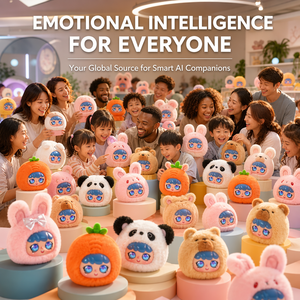
The Greater Nagoya market is witnessing a profound intersection of demographic forces. The persistent trend toward single-child households in prime residential wards such as Showa, Mizuho, and Chikusa has drastically increased per-child educational allocation. Concurrently, Aichi's aging population has accelerated the expansion of adult emotional companion products. Intelligent plush toys and interactive robotic pets are no longer relegated purely to nursery rooms; they are increasingly purchased by working adults seeking stress mitigation and elderly individuals seeking cognitive engagement and verbal interaction.
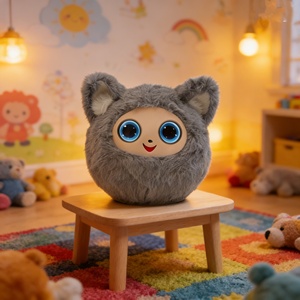
Consequently, wholesale buyers, IP license holders, and department chain procurers are actively shifting away from static plush novelties toward embedded AI products featuring conversational memory, dynamic LED eye emotional expressions, and multi-dialect cloud synchronization. China's manufacturing ecosystem—specifically Shenzhen’s tightly coupled micro-electronics, acoustic tooling, and plush manufacturing supply chains—provides Nagoya buyers with the rapid iteration speeds and economies of scale required to maintain profitable commercial margins.
Dominant Use-Cases Across Greater Nagoya Retail & Institutional Channels
Early Bilingual EdTech
Widely deployed in private preschools and home learning environments across Nagoya suburbs. Embedded LLMs facilitate natural, unscripted English conversation practice alongside native Japanese interaction without screen-fatigue risks.
Senior Cognitive Iyashi Companions
Utilized in eldercare facilities throughout Aichi and Mie Prefectures. Warm tactile plush surfaces combined with responsive voice recognition provide continuous comfort, mitigating isolation and prompting cognitive retention.
Anime IP Pop-Culture Merchandising
Distributed via Osu shopping arcades, railway terminus concept shops, and online specialty hubs. Licensed anime character hulls are integrated with specialized voice persona models and customized LCD emotional eye movements.
Acoustic & Structural Engineering Bottlenecks in Japanese Toy Production
Building an AI companion toy presents a far higher engineering threshold than building standard consumer electronics. Stuffed plush shells absorb high-frequency sound waves and muffles microphone arrays. Conversely, high-gain microphones inside a plush body routinely register internal mechanical noise generated by servo motors and kinetic chassis movements. In our Shenzhen laboratories, our acoustic engineers solve this via customized dual-capsule MEMS microphone housings and calibrated sound port chambers engineered directly into the toy’s skeletal framework.
Furthermore, consumer protection standards enforced by the Japan Toy Association (JTA) demand that internal rigid components—such as lithium-ion battery brackets, speaker enclosures, and printed circuit board assemblies (PCBAs)—remain fully non-hazardous even under intense physical stress. In our automated injection and assembly lines, internal electronics are encased in shatterproof, flame-retardant ABS/polycarbonate sub-housings wrapped in multi-layered hypoallergenic padding, ensuring zero seam migration or sharp-point emergence during drop and compression testing.
Engineering Feasibility & Procurement Architecture Matrix
To eliminate capital inefficiencies and software misalignments, we offer Nagoya importers four standardized engineering integration routes based on proven Tuya IoT infrastructural backbones:
| Development Route | Technical Baseline | Suitable Chūkyō Importer Profile | Tooling / Dev Cost | Sampling Schedule |
|---|---|---|---|---|
| Option 1: Standard Turnkey Platform | Pre-certified shell ergonomics, existing companion app, cloud dialogue stack | E-commerce speed-to-market sellers; seasonal department store orders | Low Sample Fee (USD 350–400) | 25–30 Days Approval |
| Option 2: Custom Tooling & Mold | Proprietary face/chassis injection tooling, custom HD LCD eyes, standard app core | Mid-sized Japanese lifestyle brands requiring unique aesthetic distinction | Mold starting at USD 10,000 | 40–50 Days Tooling |
| Option 3: Tuya SDK Integration | Standardized hardware PCBA connected via SDK directly into client's existing native app | Established EdTech firms or corporate entities with an existing app ecosystem | SDK Service: USD 12,000 | Dependent on client app readiness |
| Option 4: Fully White-Labeled App | Proprietary branded mobile application deployed on iOS/Android via our framework | Enterprise retail chains, licensing holding groups seeking complete brand autonomy | App Engineering: from USD 14,000 | Approx. 45 Days Parallel |
Japanese Regulatory Compliance & Import Protocols
Importing connected AI toys into Nagoya Port requires meticulous attention to cross-jurisdictional compliance protocols. A failure at Customs clearance or market inspection results in devastating inventory quarantine. Our manufacturing operation provides turnkey certification management specifically aligned with Japanese domestic laws:
- MIC Technical Conformity (Giteki / 技適): All Wi-Fi and Bluetooth Low Energy (BLE) transmission modules deployed inside our AI toys carry genuine Japanese Radio Law conformity certifications, eliminating administrative seizure risks.
- Japan Food Sanitation Act (JFSA): Toys targeted at infants under 36 months undergo rigorous extraction testing for phthalates, heavy metals, and colorant migration via certified third-party testing laboratories prior to vessel departure.
- Lithium Battery Documentation: In full compliance with UN 38.3, MSDS, and PSE safety frameworks, our battery packs incorporate dual-stage thermal cutoffs, overcharge protection ICs, and flame-retardant cellular wrappers suitable for air freight via Chubu Centrair (NGO) or containerized sea transport directly to the Port of Nagoya.
Our Core Manufacturing Infrastructure: The AIbottoy Hub Advantage
Headquartered in Guangming District, Shenzhen, Shenzhen AIbottoyhub Technology Co., Ltd. has stood at the technological forefront of intelligent toy manufacturing since 2017. Serving over 200 premier toy brands across the USA, the EU, Oceania, and East Asia, we have eliminated the historic disconnect between plush craft workshops and high-precision electronic assembly facilities.
Our unified factory operations consolidate high-speed SMT placement lines, ultrasonic plastic welding, acoustic testing chambers, cleanroom packaging, and precision plush sewing under a unified ISO 9001 and ICTI ethical manufacturing umbrella. Unlike trading intermediaries who outsource electronics assembly to unverified sub-vendors, our in-house engineering team controls every firmware flash, every RF trace calibration, and every fabric pull-test. This technical integrity provides Nagoya importers with rapid debugging cycles, consistent component sourcing, and reliable delivery timelines even during peak autumn export cycles leading into the Year-End holiday trade.
Procurement FAQ: Nagoya Buyer Essentials
Direct answers addressing technical constraints, order quantities, logistical protocols, and intellectual property safety.
Does the conversational AI system handle native Japanese and English?
Yes. Default production units leverage Tuya’s mature cloud dialogue framework supporting 66 distinct global languages, featuring exceptional natural language processing (NLP) performance for standard Japanese (Kanto) as well as bilingual English language learning applications.
How does our team ensure intellectual property and design exclusivity?
We routinely execute enforceable bilateral Non-Disclosure Agreements (NDAs) prior to receiving customer concept art or 3D CAD files. Proprietary molds, unique fabric embroidery patterns, and custom voice prompts remain 100% exclusive to the commissioning buyer.
Can we connect the toy to our own private LLM or external server?
We emphasize complete technical transparency: all our active AI production routes run directly on Tuya’s enterprise AI model accounts and optimized cloud infrastructure. We do not support unverified external low-budget server hooks or deep custom firmware architectures outside this proven ecosystem.
What shipping documentation is provided for the Port of Nagoya?
Every commercial consignment includes complete UN 38.3 test summaries, certified MSDS/SDS sheets, drop test verification, Sea/Air Transport Appraisal Reports, and complete Giteki radio registration paperwork for hassle-free clearance through Nagoya Customs.
What are the baseline minimum order quantities (MOQ) and lead times?
Standard OEM private label orders typically begin at 1,000 units with a production lead time of 15–20 days following pre-production sample approval. Projects requiring fully custom injection tooling for faces or LCD frames require 40–50 days for mold fabrication.
What physical and chemical safety testing guarantees are provided?
Our manufacturing lines operate strictly under ISO 9001 and ICTI ethical standards. Every product batch is engineered to seamlessly satisfy ST-2016 (Japan Safety Toy Standard), EN71 Parts 1–3, and ASTM F963 international flammability and toxicity requirements.