EdTech Audio AI
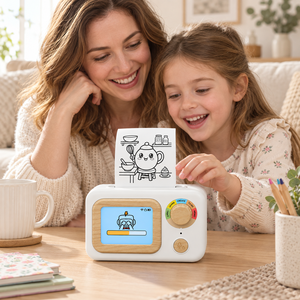
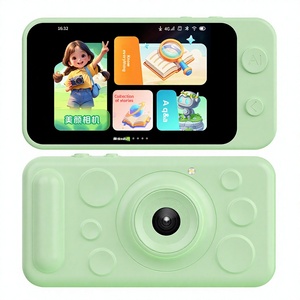
Xprinter MK1 2026 Portable Thermal Voice to Sticker AI Generator
Voice Recognition
Thermal Zero-Ink
Kid-Safe ABS
Explore our production-ready smart hardware models. Each unit combines proprietary micro-electronics, low-power edge compute, and cloud-assisted conversational intelligence tailored for international private labeling.
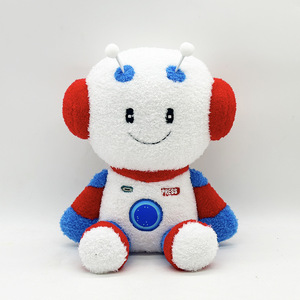
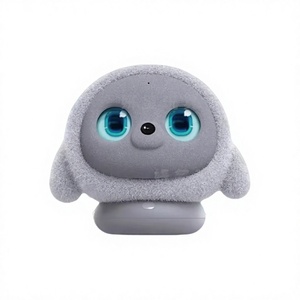
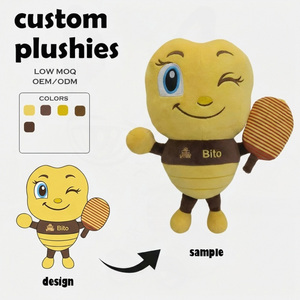
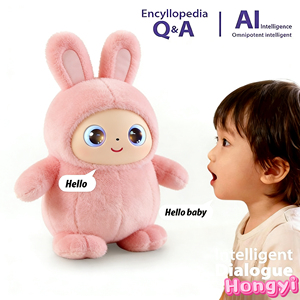
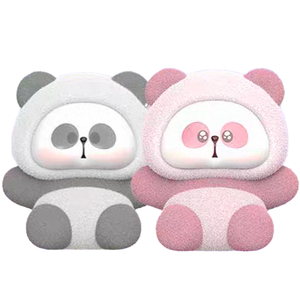
The transition from passive stuffed animals to autonomous, cognitive companion hardware represents the most significant shift in the global juvenile products sector in over three decades. For distributors, brand custodians, and retail purchasing directors across Finland—from the commercial corridors of Helsinki and Espoo to technology clusters in Tampere and Oulu—sourcing an AI-enabled personalized plush toy requires balancing three competing engineering paradigms: high-fidelity conversational artificial intelligence, hyper-strict Nordic consumer safety standards, and robust electromechanical reliability.
Finland occupies an anomalous and highly sophisticated position within the global consumer robotics landscape. As the home of pioneering telecommunications infrastructure, world-renowned early childhood educational frameworks (varhaiskasvatus), and stringent data-sovereignty governance under both GDPR and the recently enacted European Union Artificial Intelligence Act (EU AI Act), Finnish procurement officers cannot afford the risks associated with generic, unregulated IoT toys. Stuffed toys embedded with microphones, micro-cameras, edge-processing chipsets, and rechargeable lithium-ion battery chemistries must satisfy the combined mandates of traditional toy directive EN 71, consumer electronics safety EN 62115, radio equipment directive RED 2014/53/EU, and the strict cybersecurity benchmarks outlined by Traficom (The Finnish Transport and Communications Agency).
Strategic Engineering Insight for Nordic Buyers: Successful AI plush manufacturing depends on resolving acoustic attenuation inside the plush chassis. Integrating a noise-canceling dual-MEMS microphone array behind thick, fire-retardant polyester fur without losing speech intelligibility in Finnish (a language characterized by distinct vowel length and subtle phonemic shifts) requires specialized mechanical acoustic cavity tuning prior to fabric shell finalization.
At Shenzhen AIbottoyhub Technology Co., Ltd., we operate as an end-to-end original equipment and original design manufacturer (OEM/ODM). We bridge high-efficiency manufacturing in Shenzhen with precise regional compliance requirements in Finland. With mature architectural deployments utilizing Tuya-based IoT cores, integrated large-language-model processing pipelines (including OpenAI GPT, DeepSeek, and custom localized LLMs), and clean factory-floor execution spanning cleanrooms, automated SMT lines, and robotic embroidery stitching, we provide Finnish importers with a fully auditable and scalable manufacturing partnership.
How Finnish educational institutions, commercial brands, and healthcare providers are transforming interactive stuffed robotics into high-margin, scalable enterprise programs.
Finnish kindergarten pedagogy prioritizes play-based social-emotional learning over rote memorization. Our AI plush units serve as pedagogical co-educators, programmed to foster empathy, guide collaborative group play, prompt linguistic curiosity in both Finnish and Swedish, and assist speech therapy exercises without blue-light screen exposure.
During the sub-arctic Finnish polar night (kaamos), children and youth frequently experience seasonal affective disruption and elevated domestic isolation. Our emotional companion plush toys combine rhythmic haptic breathing pulses, warm internal dynamic LED illumination, and empathetic sentiment analysis algorithms to support self-soothing behaviors.
Widely adopted across assisted-living facilities in the Uusimaa and Pirkanmaa regions, our customized tactile plush animals offer responsive comfort for memory-care and dementia residents. With integrated voice prompts for medication reminders, daily hydration checks, and non-judgmental conversational cycles, the plush fosters cognitive engagement.
Analyzing the regulatory and structural trends shaping the next generation of smart soft goods in Scandinavia.
The enforcement of the European Artificial Intelligence Act establishes strict categorization for consumer products with cognitive capabilities. AI toys targeted at minors are subjected to enhanced scrutiny regarding behavioral manipulation, biometric categorization, and cognitive vulnerability exploitation. Our software stack is architecturally bounded: voice inputs pass through localized content-filtering nodes that suppress hallucinatory responses, prevent unsafe prompt injections, and discard raw audio streams post-inference. Importers receive full verification records verifying that cloud synthesis remains strictly within deterministic, non-predatory parameters.
Finnish enterprise buyers consistently demand verified environmental accountability. In response to regional sustainability targets, our factory provides private-label lines utilizing Global Recycled Standard (GRS) certified polyester fibers derived from post-consumer PET bottles. All shell outerings undergo OEKO-TEX Standard 100 Class I verification (certifying safety for prolonged skin contact with infants), ensuring zero trace formaldehyde, phthalates, aromatic amines, or heavy-metal mordants.
Conversational immersion breaks when audio latency exceeds 1,200 milliseconds. For Finnish children, delays cause dialogue desynchronization and emotional disengagement. By combining efficient on-device VAD (Voice Activity Detection), optimized audio compression pipelines, and European cloud proxy edge servers (including AWS Stockholm and Frankfurt nodes), our Tuya-powered hardware achieves end-to-end voice roundtrips averaging 650ms to 850ms across Finnish 4G/5G residential networks.
| Hardware Subsystem | Standard Configuration | Nordic Enterprise Tier (Optional) | Compliance / Verification Norms |
|---|---|---|---|
| Compute & Audio DSP | 32-bit Dual-Core MCU with Hardware Audio Codec | Embedded NPU with On-Device Wake-Word Detection | EN 62115:2020 / EN 55032 Class B |
| Wireless Connectivity | Wi-Fi 2.4GHz 802.11 b/g/n + BLE 5.0 Core | Dual-Band Wi-Fi (2.4/5GHz) + BLE 5.3 Mesh | RED 2014/53/EU / ETSI EN 300 328 |
| Microphone System | Single Omnidirectional MEMS (-42dB Sensitivity) | Dual-MEMS Beamforming Array with Echo Cancellation | Acoustic Shell Attenuation Calibrated |
| Battery & Power | 1200mAh 3.7V Li-Polymer with Thermal Cutoff | 2500mAh Low-Temp Cell with Hard Silicon Enclosure | UN 38.3 / IEC 62133-2 / RoHS 2011/65/EU |
| Textile & Filling | 100% Virgin Hollow Conjugated PP Cotton | 100% GRS-Certified Recycled rPET Fiber + Organic Cotton | EN 71-1, 71-2 (Flammability), 71-3 (Chemical) |
| Haptic / Visual Output | Micro Vibration Motor + Bicolor Status LED | Precision Kinetic Servos + Custom OLED Graphic Eyes | Low-Voltage Directive / Eye Safety IEC 62471 |
A frequent point of failure in low-grade AI plush production is microphone distortion caused by synthetic fiber shedding and resonant rattle from internal speaker chambers. In our Shenzhen clean manufacturing facility, our electromechanical engineers mount every transducer in custom-molded silicone isolation gaskets. This isolates speaker vibrations from the sensitive microphone membrane, eliminating feedback loops during rapid-fire conversational turns even when held tightly in a child's embrace.
Since 2017, we have operated as the trusted engineering backbone for more than 200 consumer electronic and toy brands across Europe, North America, and Oceania.
Every production batch undergoes incoming material controls, seam-pull tension testing (exceeding 90N mandates), drop simulations, battery thermal cycling, and functional voice-inference tests before export packaging. Third-party inspections (SGS, TÜV, Intertek) are supported.
Select from 4 battle-tested development routes: rapid private labeling on existing proven moulds (samples in 25-30 days), custom facial/chassis tooling development, SDK cloud connectivity into your proprietary mobile application, or full white-label app deployment in app stores under your company entity.
We handle lithium battery customs documentation, providing complete UN 38.3 test summaries, Material Safety Data Sheets (MSDS), and ocean or air freight directly to Helsinki-Vuosaari port or Helsinki-Vantaa Airport. Clear commercial invoicing and zero tariff surprises.
Direct technical and operational answers to facilitate streamlined sourcing decisions and vendor qualification.
Our platform incorporates Tuya-based multi-language engine configurations that support 66 languages, including Finnish (Suomi) and Swedish (Svenska). The conversational LLM accounts for complex compound words and agglutinative grammars common in Finnish, ensuring responses sound natural and age-appropriate rather than robotic.
Every shipment is furnished with comprehensive technical documentation for CE marking under the EU Toy Safety Directive 2009/48/EC (EN 71-1: Physical/Mechanical, EN 71-2: Flammability, EN 71-3: Chemical Migration), Electric Toy Safety (EN 62115), Radio Equipment Directive (RED 2014/53/EU), RoHS, and battery documentation (UN 38.3, MSDS).
Our system uses an ephemeral audio processing workflow. Raw voice recordings are captured solely for speech-to-text tokenization and conversational synthesis, after which the audio packets are purged. No biometric identifiers or voiceprints are stored or cross-referenced for behavioral advertising, meeting the European General Data Protection Regulation and Finnish child protection frameworks.
For existing mold designs with customized plush outer shells, private-label packaging, and customized voice boot sequences, the standard production MOQ starts at 500 to 1,000 units. Functional prototypes are delivered in 25 to 30 days, while bulk mass production typically completes in 15 to 20 business days post-sample approval.
Yes. Via Option 3 (Tuya SDK Connection), we supply technical SDK documentation and development keys to link our toy's internal hardware controller with an app you already manage. Alternatively, we can deploy a turn-key white-label iOS and Android app fully branded with your corporate identity under Option 4.
Standard lithium batteries suffer significant capacity loss in freezing temperatures. For Nordic clients, we specify high-stability lithium polymer cells with integrated NTC temperature-sensing thermistors and battery protection ICs, preventing under-voltage cutoff down to -15°C and housed in puncture-resistant internal ABS structural capsules.