Advanced AI Toy Solutions Portfolio
Engineered hardware and intelligent edge software tailored for German and European brands, retailers, and educational institutions looking for certified smart companion architectures.

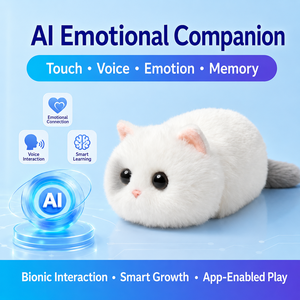
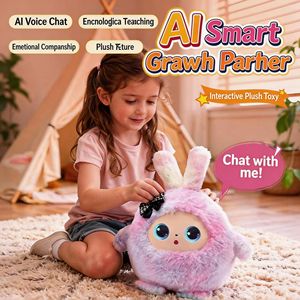
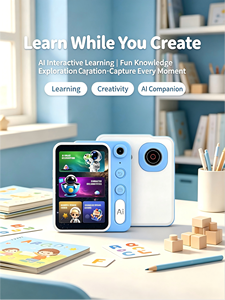
The German Smart Toy Sector: Regulatory Landscape & Engineering Paradigms
The transition toward Industry 4.0 in German consumer goods has redefined expectations surrounding interactive hardware. In Germany (Deutschland), smart toys are not evaluated merely as play items; they are scrutinized as integrated embedded IoT systems. B2B buyers operating within North Rhine-Westphalia, Baden-Württemberg, and Bavaria require strict engineering synchronization across physical durability, acoustic performance, radio emissions, and cyber-physical security.
When sourcing connected hardware, procurement managers must reconcile advanced artificial intelligence with rigorous European statutory frameworks. Germany’s Bundesnetzagentur (Federal Network Agency) enforces strict controls regarding non-directional microphones, visual sensors, and transmission equipment in domestic environments to prevent covert surveillance. Concurrently, the European Cyber Resilience Act (CRA) and the General Data Protection Regulation (GDPR / DSGVO) mandate baseline encryption, role-based access tokens, and explicit data governance architectures. As an experienced manufacturing partner with an established factory infrastructure, AIbottoy Hub provides European enterprises with certified, production-grade hardware engineering tailored to these regional compliances.
DSGVO & Privacy By Design
Local edge processing and zero-retention cloud pipelines designed to satisfy German consumer protection standards without persistent voice logging.
DIN EN 71 Mechanical Rigor
Heavy-duty tensile stitching, torque-tested structural internal housings, and non-toxic polymer sourcing validated for long-cycle child safety.
RED (Radio Equipment Directive)
Certified 2.4GHz / 5GHz Wi-Fi and Bluetooth Low Energy (BLE) micro-strip antennas minimizing spurious emissions and power overhead.
Localized Deployment Scenarios in the DACH Market
Modern connected toys fulfill specific commercial, therapeutic, and pedagogical use cases across the German-speaking territories. Sourcing decisions require clear alignment with how end-users interact with physical hardware in controlled settings:
MINT & Montessori Pedagogical Labs
Integration of bionic robotics and voice-assisted diagnostic tools within German progressive school curricula (Waldorf and Montessori), focusing on logical sequencing and coding fundamentals without aggressive screen dependency.
Therapeutic & Senior Companion Care
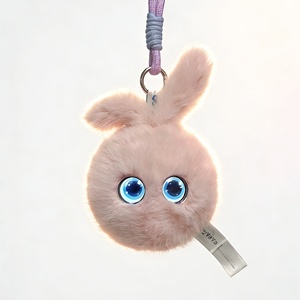
Deployment of tactile AI plush pets in German geriatric care facilities (Altenheime). Haptic feedback routines, purring frequencies, and low-latency acoustic cues assist individuals navigating memory deficits and loneliness.
Omnichannel Branded Retail Collectibles
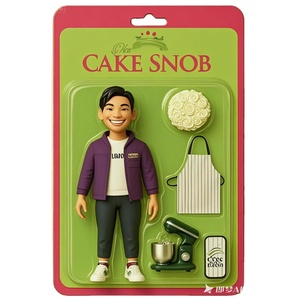
Interactive designer blind-box figures and smart branded collectibles for European entertainment IPs, supported by real-time smartphone telemetry, gamified intimacy progression, and high-margin seasonal drops.
Localized Technology Trends Transforming German Toy Retail
Procurement strategies in Frankfurt, Munich, and Berlin are adapting to three core technological shifts driving consumer adoption in 2025 and beyond:
| Trend Factor | Traditional Smart Toy Approach | Next-Gen AI Factory Engineering (AIbottoy Hub) | Business Impact (German Retail) |
|---|---|---|---|
| Inference Architecture | Pure cloud-dependent processing leading to 2-3 second voice lag | Edge-computing PCBA with local wake-word and acoustic processing | Instant conversational response, reduced latency, GDPR-aligned offline modes |
| Language Processing | Rigid pre-recorded English prompts with limited German support | Integrated multilingual LLM engine supporting regional German dialects | High consumer satisfaction across Germany, Austria, and Switzerland |
| Battery & Thermal Safety | Standard pouch lithium cells with basic PCM circuitry | UN 38.3 certified cells with PTC thermistors and dual-layer safety enclosures | Frictionless customs clearance, zero thermal risks, compliant logistics |
| App Longevity | Third-party disposable utility apps abandoned after 1 year | Tuya-backed enterprise cloud architecture with scheduled OTA firmware updates | High retention, verified security maintenance, sustained aftermarket sales |
Production Engineering & Factory Competencies
Operating out of our high-capacity manufacturing center in Shenzhen since 2017, AIbottoy Hub bridges Chinese rapid-prototyping efficiency with European precision expectations. An AI companion toy requires balanced execution across three distinct disciplines: industrial fabric construction, high-density microelectronics, and secure cloud networking. Plush-only workshops lack electronic design expertise, while pure electronics makers frequently mismanage mechanical plush tolerances and acoustic muffling.
Acoustic Cavity Optimization
Custom microphone ports and dual-chamber resonance enclosures engineered into plush stuffing, preserving 98% wake-word accuracy through heavy fabrics.
In-House HDI SMT Production
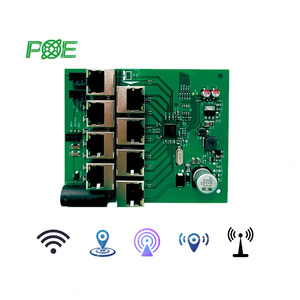
Rapid automated surface mount technology (SMT) for multi-layer edge computing boards, integrating secure Bluetooth and Wi-Fi chipsets without outsourcing.
12-Step Quality Verification
Every single unit undergoes pairing tests, continuous audio stress sweeps, battery discharge telemetry analysis, seam-strength pull tests, and drop assessments.
Procurement FAQ: German Buyer Technical & Legal Inquiries
How does the factory resolve Bundesnetzagentur regulations on smart toys?
German federal authorities restrict toys containing concealed audio/video transmission systems that can stream unnotified. Our products feature physical LED transmission indicators, hardware microphone mute switches, and strict authentication handshakes to ensure total compliance with German telecommunication and privacy laws.
What battery documentation is provided for German and EU customs clearance?
All battery-powered products ship with authentic UN 38.3 test summaries, Material Safety Data Sheets (MSDS), and drop-test packaging compliance certificates. Forwarders and customs authorities at ports such as Hamburg or Frankfurt receive full pre-shipment documentation sets.
Can the factory deploy custom German voice models and regional idioms?
Yes. Our Tuya-backed architecture supports over 66 languages, including localized High German (Hochdeutsch) with natural tone modulation. Specialized vocabulary, child-safe phrase filtering, and educational prompt trees can be configured during the firmware preparation stage.
What are the standard lead times for custom tooling vs. rapid sampling?
Functional prototypes utilizing our existing internal electronic enclosures take 25–30 days. Projects requiring custom injection molds for expressive face plates, robotic linkages, or LED matrix housings generally require 40–50 days for steel tooling, followed by mass production runs in 15–20 days.
Does AIbottoy Hub offer binding Non-Disclosure Agreements (NDAs)?
Yes. We regularly execute bilingual English-German NDAs with corporate clients. Your industrial 3D CAD files, graphic design assets, brand trademarks, and proprietary voice-prompt scripts remain protected throughout the prototyping and mass manufacturing lifecycles.
What are the Minimum Order Quantities (MOQs) for private-label OEM?
Standard OEM private-label production begins at accessible volume thresholds to allow German brands to test new SKUs in regional retail. Customized shell fabrics, personalized packaging, and custom-branded companion applications can be developed on modular production tiers.
Initiate Your AI Smart Toy Development Program
Partner with an engineering manufacturer that understands European compliance, precision edge computing, and reliable high-volume execution. Speak with our technical project directors today.
Send an Inquiry