STEM Companion
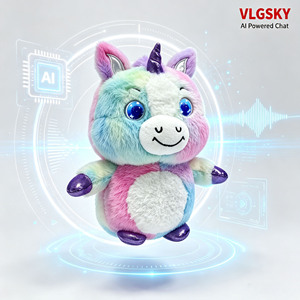
Explore fully functional reference platforms engineered for instant white-label adaptation, pilot prototyping, or proprietary mold development for the Costa Rican market.
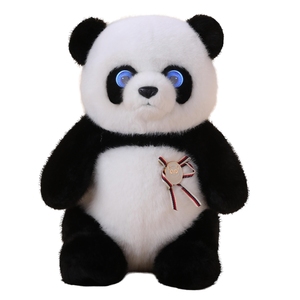
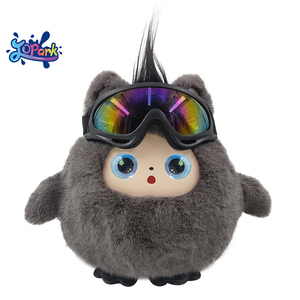
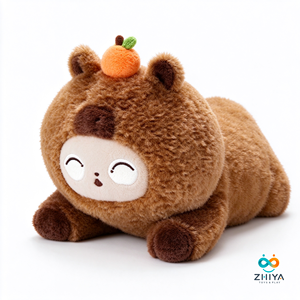
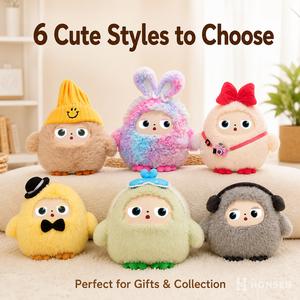
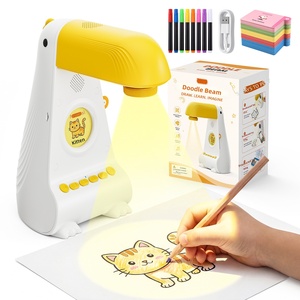
The children's consumer electronics and smart toy category across Central America is undergoing a structural paradigm shift. In Costa Rica—a nation recognized for Latin America's most stable digital infrastructure, a high human development index (HDI), and the progressive national bilingualism initiative Alianza para el Bilingüismo (AB2040)—conventional passive plastic and plush toys are rapidly losing ground to interactive, conversational, and AI-embedded hardware.
Retail distributors, private school chains, and consumer brand owners in San José, Escazú, Heredia, and Cartago are actively searching for factory suppliers capable of executing low-risk, rapid AI toy prototyping. Bringing an AI-native consumer product to market is fundamentally an interdisciplinary challenge. It is not merely a plush skin or a plastic injection shell; it is the convergence of a high-compliance toy chassis, a low-noise electro-acoustic micro-system, and a robust cloud-based Large Language Model (LLM) pipeline that delivers ultra-low latency Spanish and English voice interaction.
Historically, Central American importers attempting to develop custom smart toys faced an fragmented supply chain: design studios in North America, software developers in Costa Rica, and disconnected injection molding and assembly plants in Guangdong. This disconnected approach resulted in blown development budgets, acoustic failures (such as audio feedback caused by plush fiber resonance), non-compliant lithium battery designs rejected at Puerto Caldera or Moín customs, and indefinite delays.
Shenzhen AIbottoyhub Technology Co., Ltd. resolves this vulnerability by delivering a vertically integrated, unified engineering environment directly accessible to Costa Rican B2B enterprises. Operating from the global hardware capital of Shenzhen, our engineering team manages the complete product lifecycle—from 3D mechanical CAD drafting, PCB circuit prototyping, and MEMS microphone array tuning, to Tuya IoT cloud configuration and international toy safety certification (EN71, ASTM F963, ISO 9001, and UN 38.3).
Select the development trajectory calibrated to your brand's capitalization, timeline, and degree of aesthetic customization.
| Prototyping Route | Underlying Architecture | Primary Market Use-Case | Lead Time | Investment Baseline |
|---|---|---|---|---|
| Option 01: Existing APP + Turnkey AI Shell | Tuya IoT Cloud, pre-tested SoC, standardized voice core, customized outer plush/skin | Fast market testing, institutional pilot programs, minimal capital outlay | 25–30 Days | Low Sample Cost ($350–$400) |
| Option 02: Custom Face / LED Matrix Tooling | Proven internal AI PCBA + proprietary injection mold for character expression/LCD face | Proprietary Costa Rican wildlife IP (sloths, toucans, jaguars), retail collectibles | 40–50 Days | Mold Tooling from $10,000 |
| Option 03: Tuya SDK to Client Native App | Tuya OpenAPI & embedded hardware SDK connecting directly to client's existing backend | Established ed-tech academies and private tutoring mobile apps | Flexible Roadmap | Integration Fee ~$12,000 |
| Option 04: White-Label Branded App Ecosystem | Full standalone OEM App published to App Store & Google Play under client brand | National consumer brands, licensed corporate retail chains in Central America | 30–45 Days | Software Suite from $14,000 |
Engineered to meet the specific pedagogical, environmental, and commercial dynamics of the Central Valley and coastal eco-tourism corridors.
Aligned with the Ministry of Public Education (MEP) bilingual educational directives, our smart companions operate as real-time English and Spanish conversational tutors. Installed in private pre-schools and elementary academies across San José and Heredia, these AI robots offer conversational practice, pronunciation scoring, and natural dialogue without child screen addiction.
Costa Rica's world-famous biodiversity brands (sloths, scarlet macaws, red-eyed tree frogs) can be transformed into intelligent interactive ambassadors. Hospitality resorts in Manuel Antonio, Guanacaste, and Arenal use our custom plush prototyping to deploy storytelling robotic guides that teach visiting families about rainforest conservation, biodiversity, and local culture.
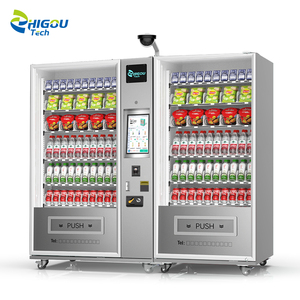
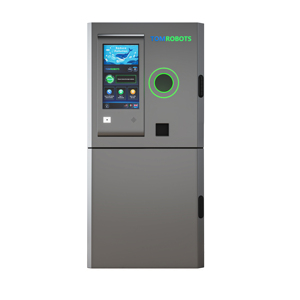
In strict harmony with Costa Rica's National Decarbonization Plan, our AI computer-vision reverse vending machines (RVM) provide interactive waste separation for retail plazas, universities, and municipal centers. Machine-learning optical recognition accurately classifies beverage containers, rewarding eco-conscious citizens and reinforcing corporate ESG compliance.
Prototyping an AI plush toy presents physical challenges that pure software engineers and conventional plush factories routinely overlook. In tropical, humid climates like Costa Rica, electro-acoustic and thermal stability within enclosed plush cavities require rigorous design-for-manufacturing (DFM) discipline:
When an AI doll speaks through an internal 3W dynamic speaker while simultaneously listening for child voice prompts, mechanical resonance through internal polyester fibers can cause immediate acoustic feedback and voice-recognition failure. AIbottoyhub engineers utilize calibrated silicone isolation chambers and high-density baffling to decouple the MEMS microphones from the internal speaker cage. This ensures clear Automatic Speech Recognition (ASR) even in noisy classroom or living room environments.
Costa Rica's coastal humidity (often exceeding 85% RH in Limón or Puntarenas) demands specialized internal PCBA protection. We apply automated conformal coatings to the circuit boards to prevent moisture-induced corrosion. Furthermore, our low-power Wi-Fi/BLE dual-mode SoCs optimize deep-sleep cycles, preventing battery heat buildup inside sealed PP-cotton shells.
Voice interaction must feel natural. Latencies exceeding 1,200ms disrupt conversational engagement for young children. Leveraging the Tuya global distributed edge network with optimized North and South American data centers, our devices achieve round-trip latency (ASR → LLM inference → TTS streaming) under 800ms across major Costa Rican carriers including ICE (Kölbi), Liberty, and Claro.
Key business drivers reshaping wholesale toy and consumer technology procurement in San José and regional logistics hubs.
Costa Rican parents are increasingly concerned over excessive tablet screen time. Voice-driven AI toys fill this void by offering dynamic storytelling, interactive trivia, and language acquisition purely through tactile plush and voice interactions, preserving eye health while fostering emotional development.
Standard monolingual toys have high return rates in Central America. Sourcing platforms must natively recognize Latin American Spanish inflections alongside neutral American English, seamlessly transitioning between languages based on the child's preference or pedagogical curriculum.
Costa Rican institutional buyers require transparent data governance. All audio processed through our Tuya cloud integration features automated end-to-end encryption, zero unauthorized voice sample harvesting, and immediate compliance with international child data privacy standards.
Headquartered in Guangming District, Shenzhen, Shenzhen AIbottoyhub Technology Co., Ltd. has specialized in smart toy electronics, robotic mechanisms, and custom AI plush manufacturing since 2017. We bridge the gap between creative concept and scalable commercial mass production:
Practical insights on technical limits, regulatory clearance, customs tariffs, and maritime freight to Central America.
Smart toys entering Costa Rica are subject to oversight by MEIC (Ministerio de Economía, Industria y Comercio) regarding toy safety and physical labeling in Spanish. Additionally, because the toys incorporate 2.4GHz Wi-Fi and Bluetooth low-energy hardware, radio homologation under SUTEL (Superintendencia de Telecomunicaciones) guidelines must be observed. Our pre-certified CE/FCC modules provide the necessary test reports to expedite SUTEL technical approval through the VUCE customs portal.
Yes. Our Tuya-integrated voice framework supports over 66 localized language variations, including neutral Latin American Spanish and regional dialects. During prompt engineering and character setup, custom dictionary tokens and context rules can be introduced so the model naturally recognizes local colloquialisms (e.g., "Pura Vida", "Tuanis", "Mae") while maintaining clean pedagogical boundaries for young children.
Under our Option 03 route, we provide Tuya SDK integration that bridges the internal smart electronics with your existing mobile app. However, to preserve stability and competitive pricing, we do not undertake bottom-up external software rewrites outside the Tuya ecosystem. If you do not have an existing mobile app, Option 04 allows you to launch a white-labeled companion application with your brand identity on both iOS and Android.
Lithium-ion polymer batteries represent classified cargo under ICAO/IATA and IMO maritime regulations. We provide verified UN 38.3 test summaries, Material Safety Data Sheets (MSDS), and drop-test packaging certifications. For ocean shipments via Pacific routes to Puerto Caldera or Caribbean routes to Puerto Moín, as well as air freight into Juan Santamaría Airport (SJO), our forwarder documentation guarantees clear customs transshipment.
For plush prototypes utilizing our mature internal electronics platform (Option 01), full working samples with functional Wi-Fi, app binding, and voice speech are completed within 25 to 30 business days at a sample fee of approximately USD $350–$400 (credited against mass production). Projects involving custom plastic face tooling, LED matrices, or articulated robotic components (Option 02) require approximately 40–50 days to complete tooling and pilot sampling.
Our standard production run MOQ starts at 1,000 to 2,000 units for fully customized plush designs with private-label packaging and custom voice content. For pilot batches or institutional testing in the Costa Rican market, lower threshold pilot quantities can be negotiated under our turnkey standard housing options. Standard production lead times average 15 to 20 days post-sample sign-off.
Partner directly with Shenzhen's dedicated AI hardware engineering team. Whether you are engineering an educational companion for Costa Rican classrooms or developing a proprietary wildlife brand mascot, our engineers deliver functional prototypes in 25–30 days.